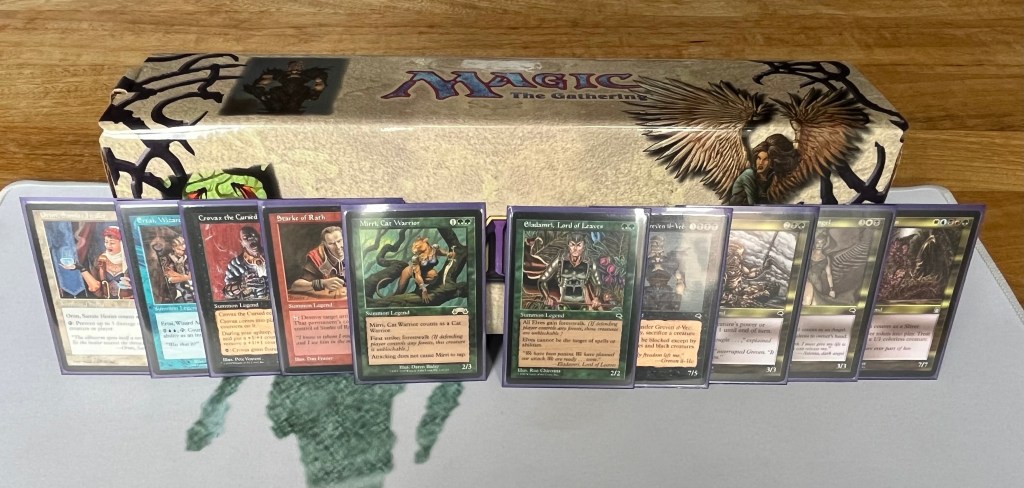
Now seemed good to revisit how I built my Tempest cube
A few weeks ago, friends got together to draft an Invasion cube. To get into it and prepare, I reread Mike Stein’s blog on how he built his cube and why, and I found it so enjoyable and valuable, even though I’d already read it several times. At the same time, a reddit post on a P1P1 for Tempest cube got a (relatively) lot of responses and juiced me up to write more about my own Tempest cube. It’s my favorite cube that I own for a lot of reasons, and I’m really pleased with how it turned out. Others also seem to really love this block and want to build their own Tempest cubes, so I decided to write up how I designed my cube and my thinking as I built it out.
So check this post out if you love Tempest, or want to see how I thought about designing my Rath Cycle cube.
Tempest block was a special time in my life, and also for others
Let’s set the stage. We’ll go back to 1997 when Tempest first came out. The Titanic movie was everywhere with Celine Dion’s “My Heart Will Go On” all over the radio. Other hits were “Tubthumping” and “Semi-Charmed Life” on the radio. The one I remember on repeat was “Angel” (In the Arms of an Angel). Maybe because I so desperately wanted to play Avenging Angel and Selenia Dark Angel. I was hitting up my friends on AOL instant messenger, and we’d get together for sleepovers and order Pizza Hut Bigfoot pizzas, drink Surge, and watch The Fugitive in our friends basement. This was the world when Tempest first hit stores’ shelves and the last time I last cracked packs.
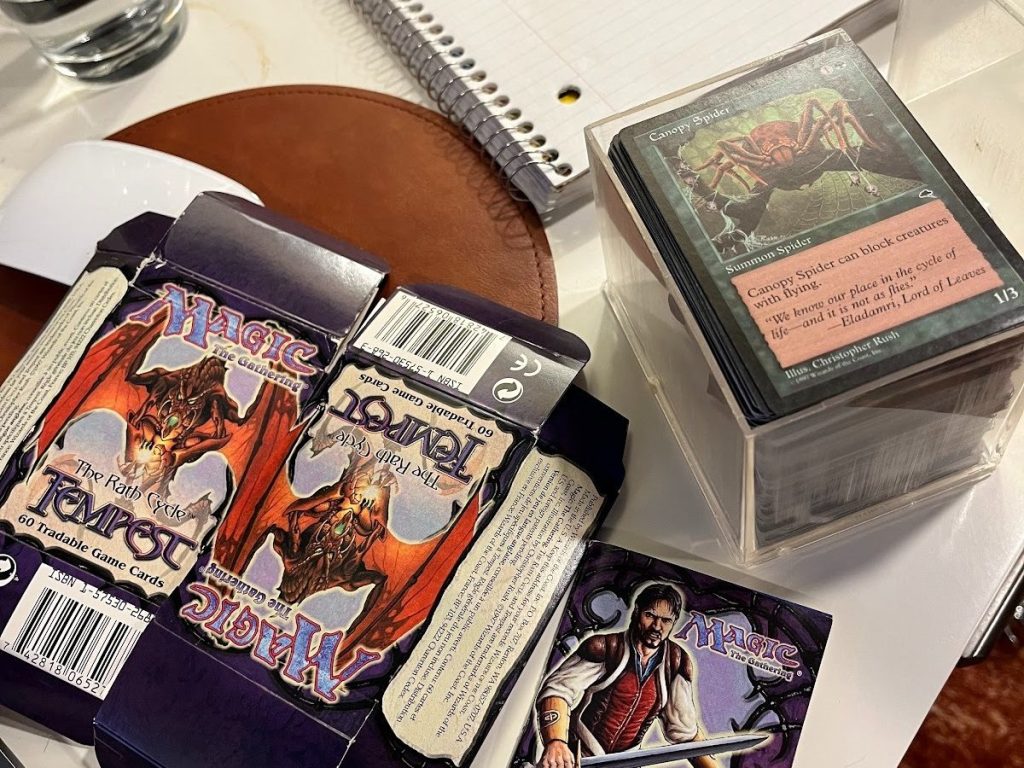
Tempest was the last block where I really played, where I bought cards, and where I sat down and jammed games on the living room carpet. I played a lot over Christmas break that year with my brother. It was also a very powerful block with a ton of iconic cards still played in Vintage, Commander, and many other formats to this day. There’s a lot to love.
I had also been following it pretty closely when it came out. I was reading The Duelist and InQuest, paying attention to the storyline. This was around the time when I started discovering the broader Magic community online, things like The Dojo, where people were writing about decks, theory, and tournament results. Decks like ProsBloom were in this era and players were for the first time posting about their tournament runs and I got excited about a new kind of Magic experience beyond just the kitchen table.
On top of my love for Tempest, there was some external validation that the format itself held up to the test of time. Tempest Remastered came out on Magic: The Gathering Online in 2015 and was quite popular, which suggested that this wasn’t just something I liked, but something that had broader appeal. I keep hearing that this was really an era where a lot of players cut their teeth on the competitive scene, which also made a lot of great memories of a new time and many made lifelong friends. I believe that’s part of the big draw for this set. It was an inflection point from kitchen table Magic to something new.
And then there was the moment that really pushed me over the edge. I was at an old school meetup and mentioned that I was thinking about putting together a Tempest cube. Someone there, Elliot, immediately said that he would love to play a Tempest block cube. At that point I hadn’t finalized the list and I certainly hadn’t acquired all the cards, but his excitement really made me want to do this. It turned the idea from something private into something shared. Once I had that, it felt like something I should actually go build. In typical Silicon Valley style, I had sold a product before I’d even made it. I kept thinking about it and decided I should at least give it a shot so I started ironing out the design.
Tempest had everything I needed for an amazing cube
Once I knew that this project was appealing to me and to others, I started thinking about what I actually wanted out of the cube. This was really my attempt to build an ideal cube. I’d previously designed an Alpha to Alliances cube, but at the time I wasn’t sure I’d ever actually acquire the cards (spoiler, I eventually would). But Tempest let me design and build something that I could hold and play, and along the way fix many of the play issues that crop up from wonky old school cards.
I think about cube design the same way I think about game design. Most importantly, it has to be fun. I wanted to hit as many of the different types of fun as possible (see my 8 Types of Fun post), and then layer everything else on top of that.
- Fun first — design for different types of fun and players
- Strategic depth — aggro, control, and combo are all viable for interesting draft & play decisions
- Fast gameplay — lean into Tempest’s aggressive games, letting you get more reps in
- Combo and synergy — include engines, interactions, wonky cards. Mark Rosewater crammed this block with these
- Iconic cards — add as many as possible, including 1 of each character printed in the block
- Make Slivers playable — Slivers have been so popular to so many players for so long. I had to have them
- Archetype diversity — I could make these decks feel closer to constructed than draft
- Aesthetic cohesion — Tempest had a great look and feel. This set had the first art guide and they nailed it.
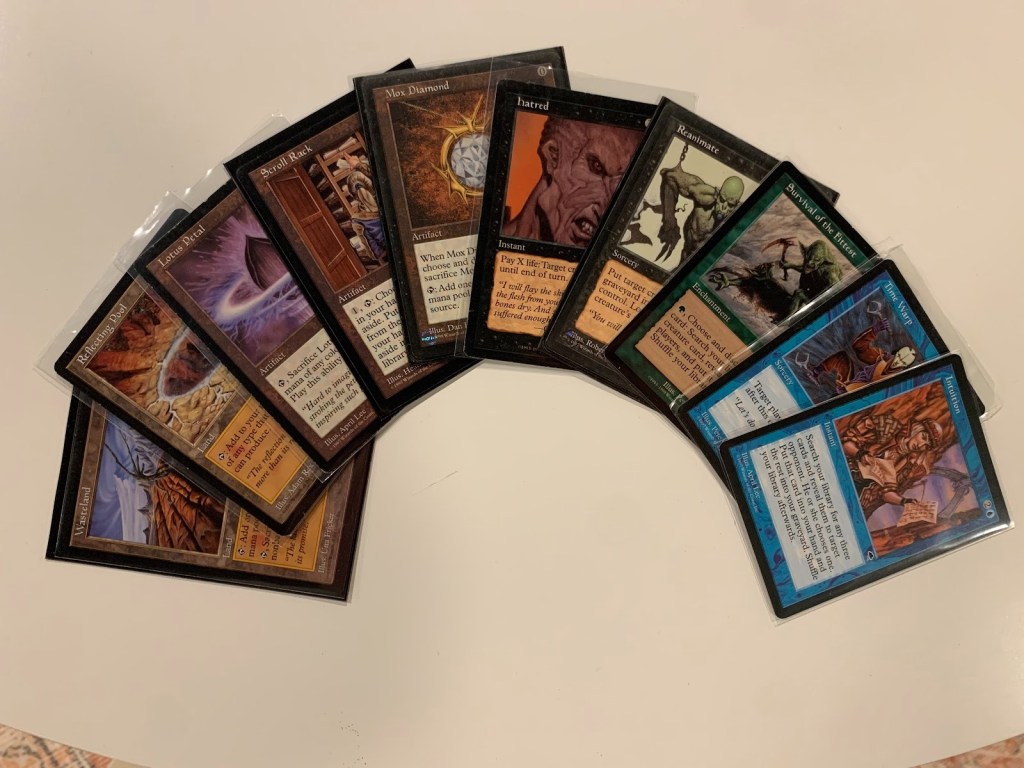
Now that I knew what I wanted, I started building.
The first version was basically everything I thought was good or interesting from Tempest, Stronghold, and Exodus. It came in around 500 cards. I drafted it to see what would happen. After a couple dozen drafts, a few powerful themes kept emerging, but there was still a ton of stuff that did nothing or wasn’t that exciting. Slivers were the clearest example of this issue. They were present, but they didn’t function as a real deck, and since they were such an important part of the appeal, that was something I needed to fix.
This is when I moved away from singleton. The idea of having only one of each card is common in cubes, but it isn’t a hard requirement, and in this case it was preventing the environment from working the way I wanted. I needed enough slivers to make them work, and this allowed me to overload on the iconic and powerful effects of some common cards from Tempest that every deck wants. Things like Mana Leak and Shock became widely available, instead of 1-of effects. Plus, Tempest had a few iconic cards, like Kindle, that care about having multiples, so I wanted to leverage that if I could.
After trying a few different approaches, I settled on a 3/2/1 structure, with three copies of each common, two of each uncommon, and one of each rare, and I organized it so that I had ten of each rarity per color. That gave me 60 slots per color and 60 slots for gold cards, lands, and artifacts where I loosened up the structure. Ten slots for each gave me enough space to fit in pretty much all the iconic cards but also enough redundancy that the effects I needed came up enough. I also got to add a few 3/2/1 vertical cycles including en-kor and the spikes. All that got me a total of 360 cards and a much clearer framework to work with.
This change made a big difference. Commons started to provide the backbone of the format, uncommons helped define the archetypes, and rares added interesting moments and wonky 1-ofs without being necessary for a deck to function. The decks started to feel polished, like something you’d put together for constructed. Most importantly, the decks felt powerful and looked exciting to play.
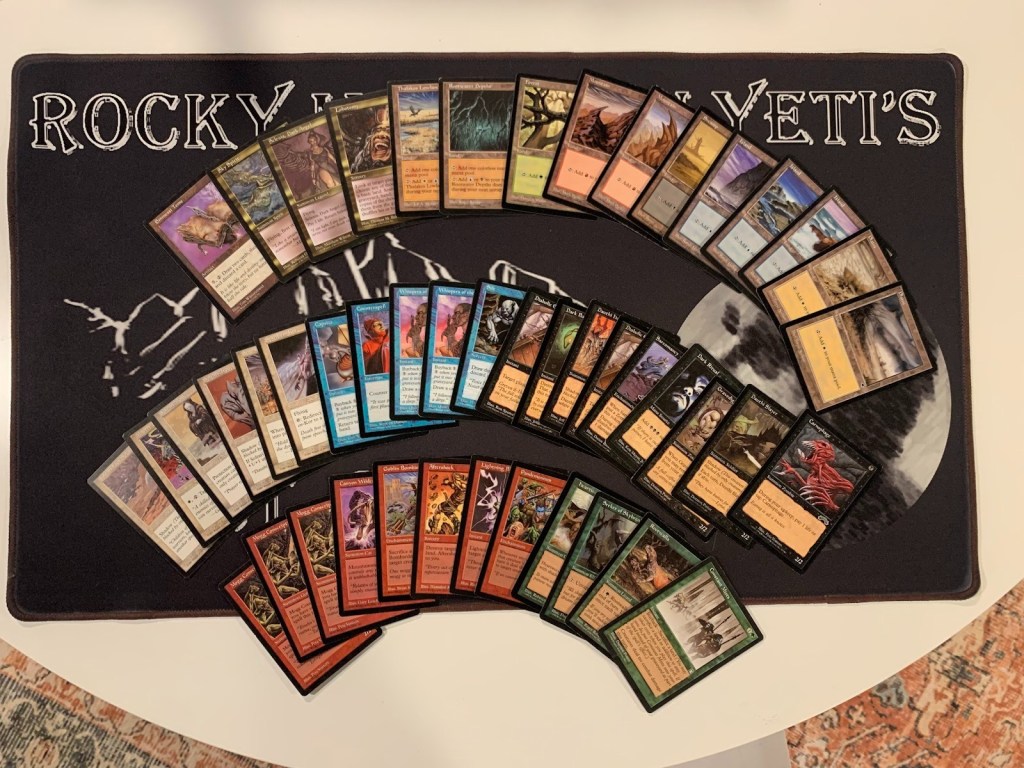
At that point, archetypes started to emerge. Some reflected what existed in Limited and Constructed at the time—RecSur, control, aggro, slivers—but they still needed refinement. It was working, but not clean yet. But I was quite pleased with how it was coming together overall. Next up, I did more individual card swaps to support overall play and key archetypes.
Archetypes, tuning, and key card choices
Once I had a structure that worked, I started focusing more explicitly on archetypes.
I’d seen other cube overviews on CubeCobra describe the cube and give key cards for archetypes. I found that super helpful, especially when playing a cube for the first time. So I did one too. I created an overview for this cube that outlined the main decks that I wanted to support, similar to how modern Limited formats present signposts for drafters. This served two purposes: it helped players understand what they could draft, and it gave me a way to check whether the cube was actually supporting those strategies.
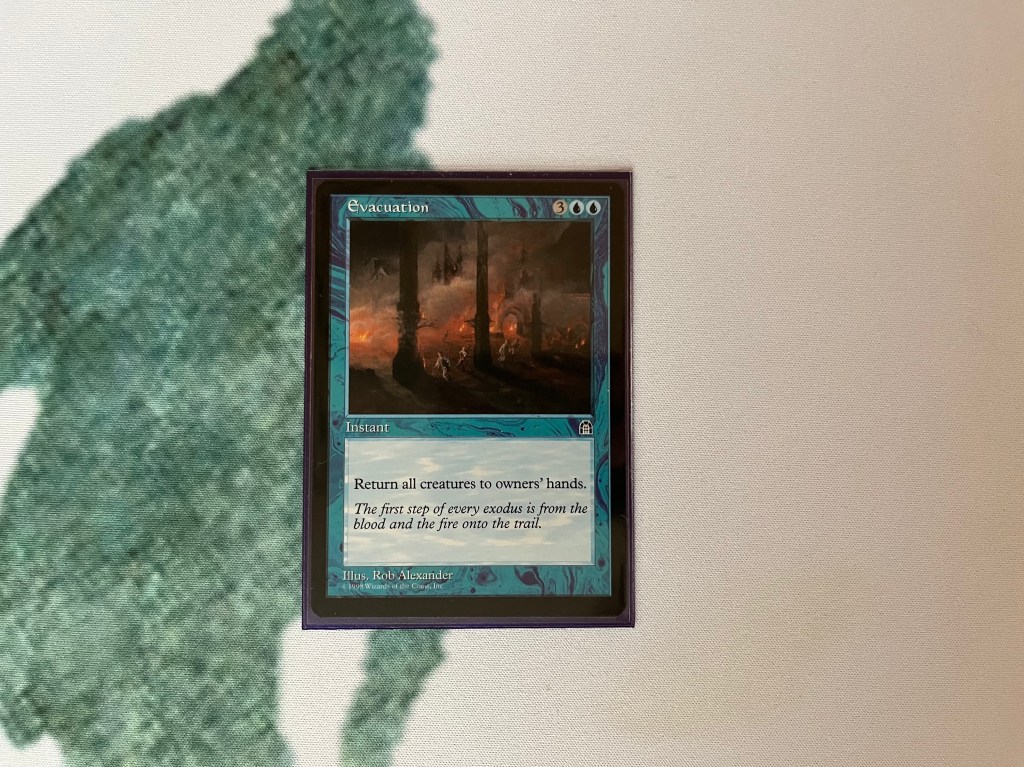
Some of the main archetypes included blue-black control, black-based aggressive decks built around cards like Hatred, White Weenie, Slivers, Dream Halls combo, and various control shells using cards like Tradewind Rider. From there, I iterated. If a deck wasn’t working, I looked at what it needed and adjusted the card pool. For example, the Dream Halls deck was interesting but not really viable, but adding Evacuation gave it a way to draw 8 more cards with Scriveners, which took it over the top to be decently consistent. White Weenie also needed some refinement, and I ended up focusing it more around protection and tokens so that it could compete more effectively.
At this point, the cube was working fairly well, and the remaining changes were about refining specific choices. I’ll cover a few late card swaps that I debated a lot but ultimately found very helpful.
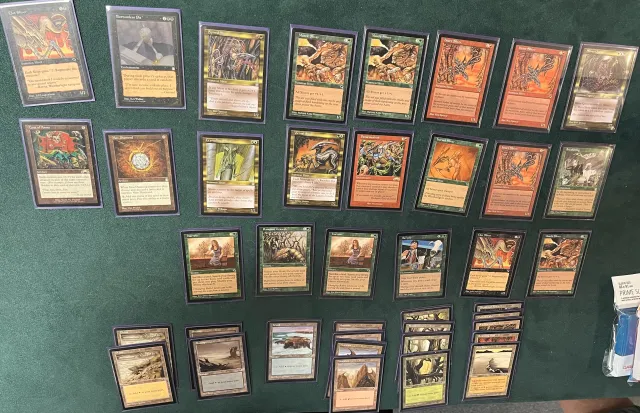
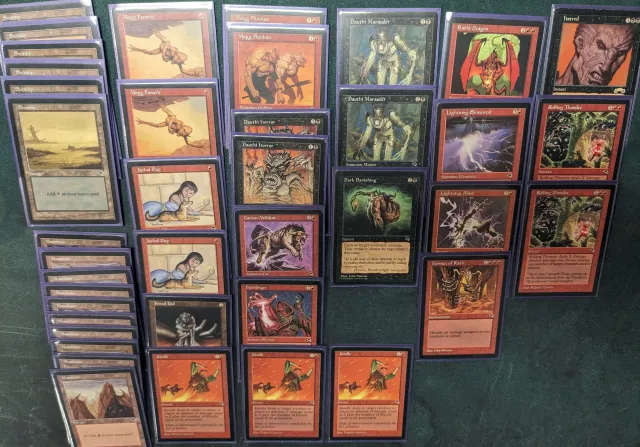
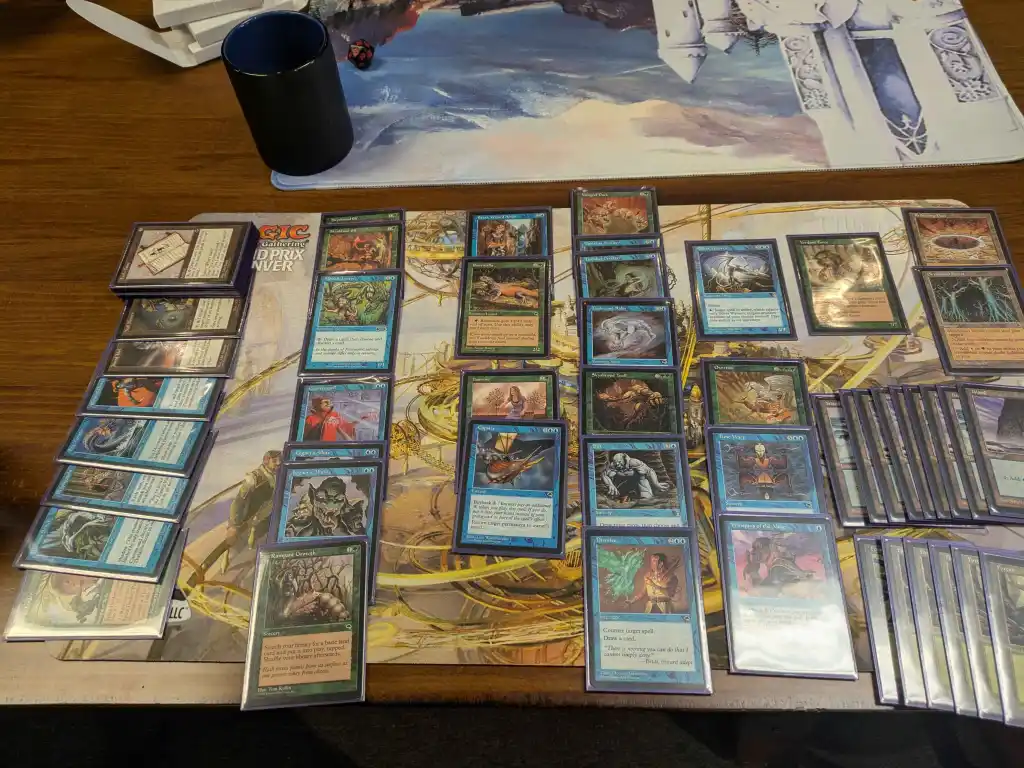
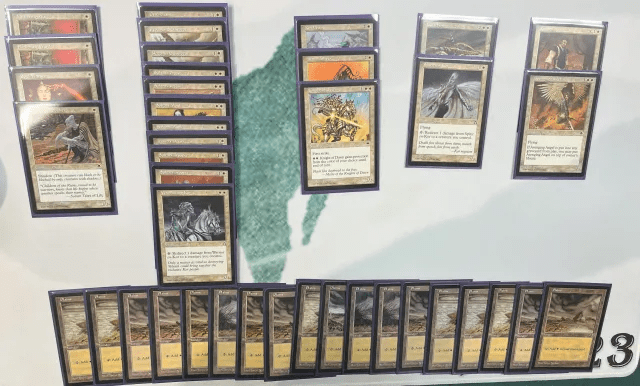
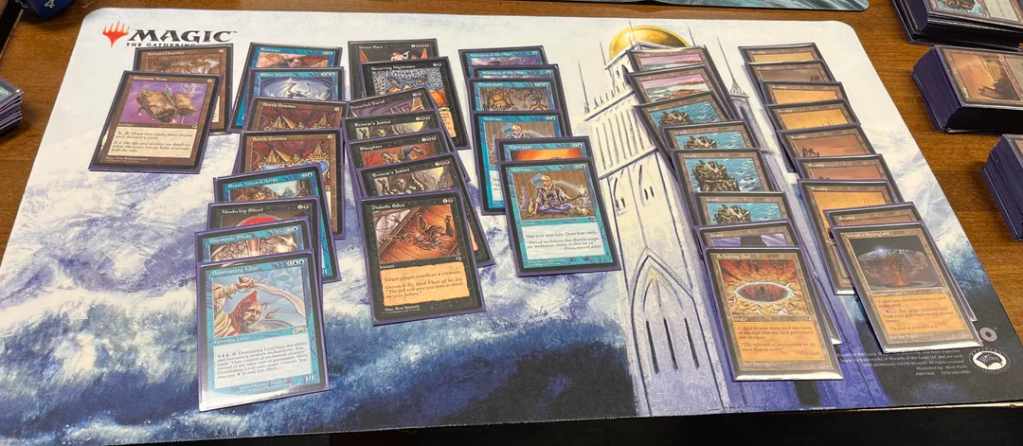
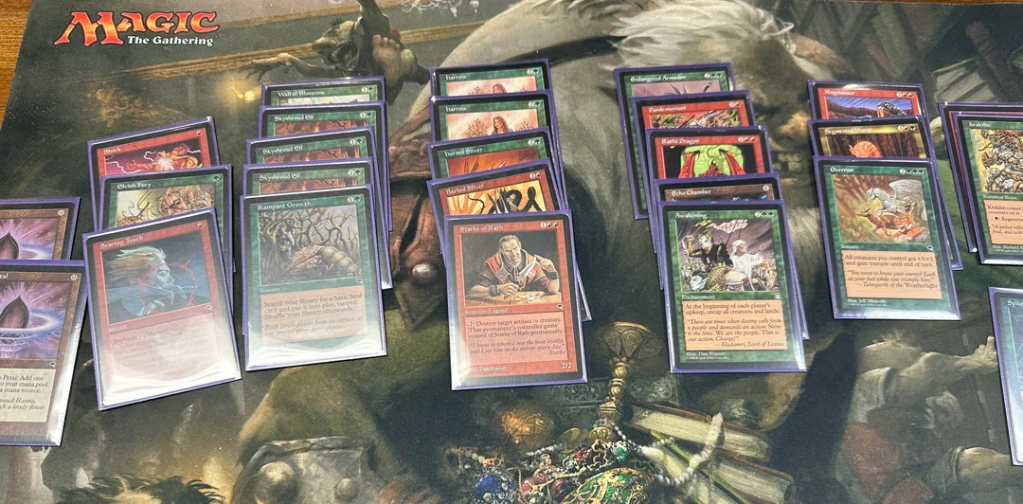
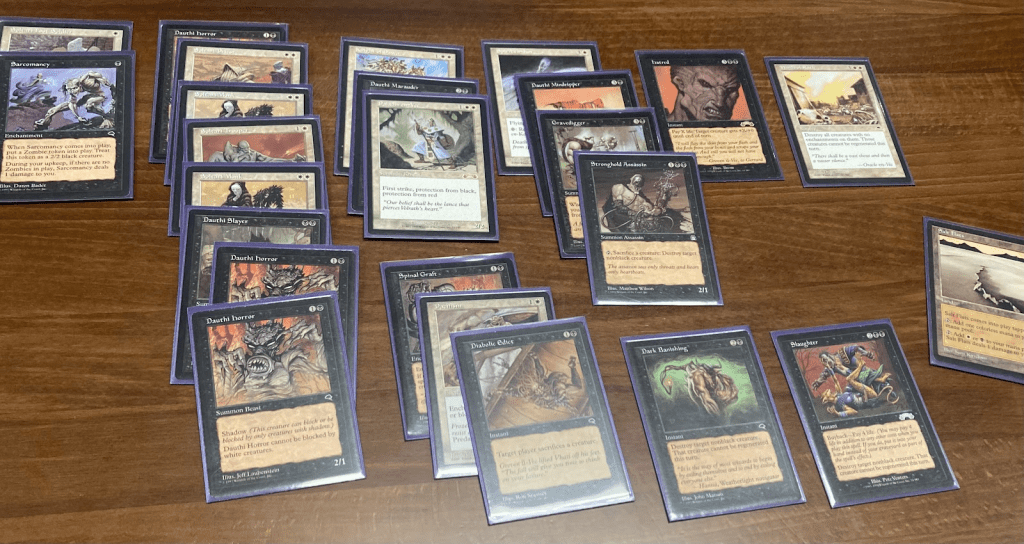
Here’s a few pics of decks people drafted that resemble the archetypes I wanted:
Slivers
RecSur
(nothing here yet. Apparently nobody has been lucky enough to grab both these bombs yet)
Sligh (this one splashes black but is red at its core)
UG Tradewinds
White Weenie (WW Protection)
Black Blue Reanimator
RG Ramp
Suicide Black
UR CounterPhoenix
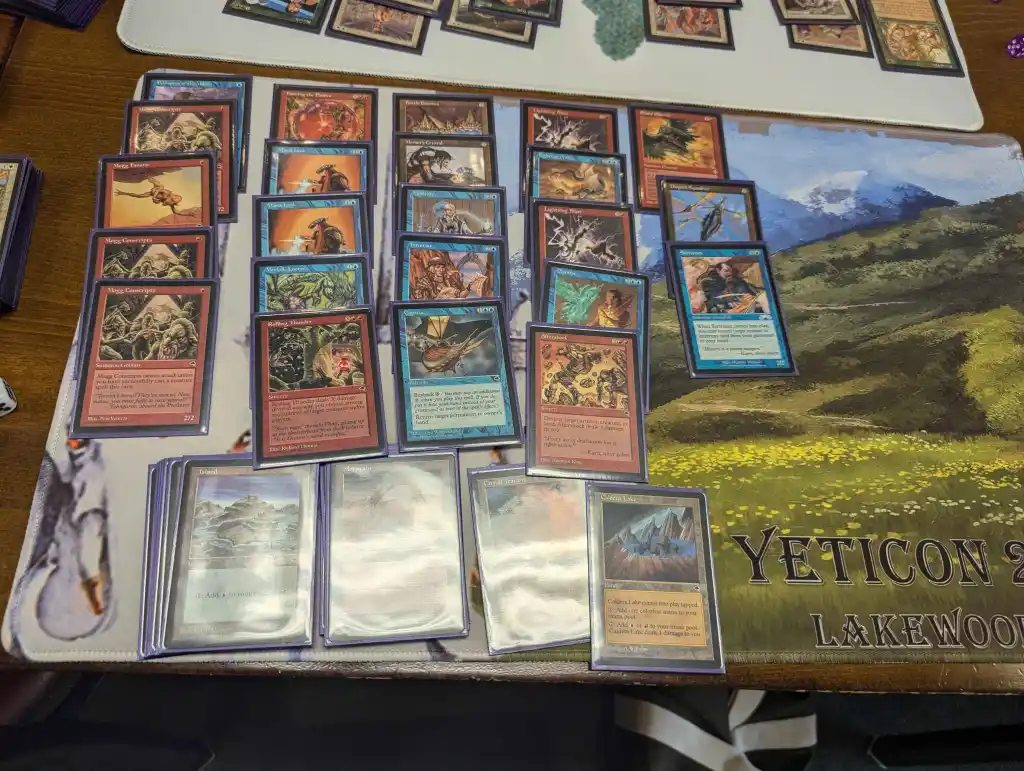
Dream Halls
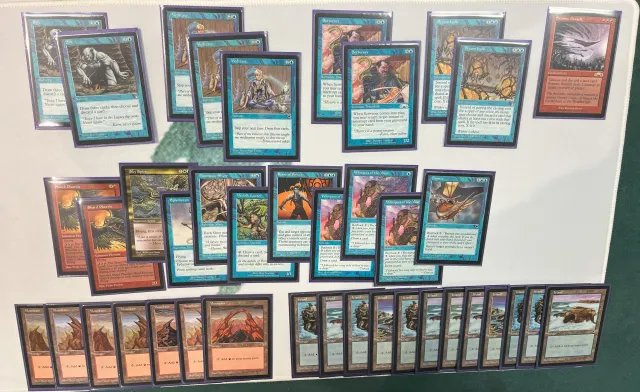
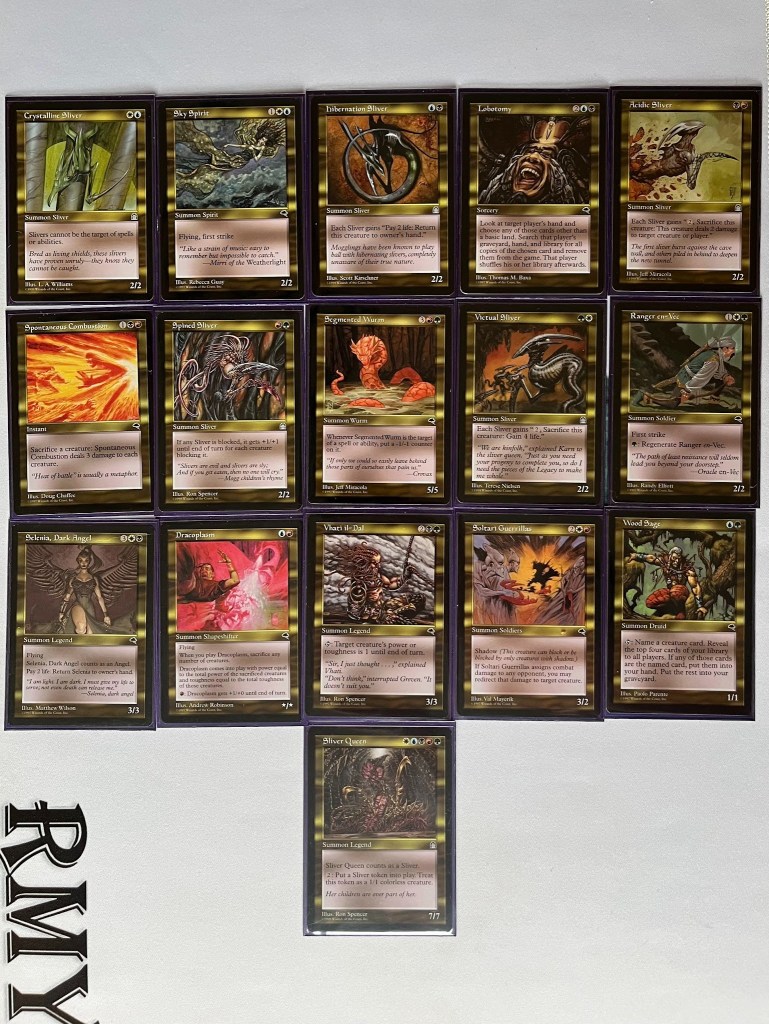
Slivers were the piece I most wanted to get right, so I made sure they had enough density to function properly. That meant I added three copies of each common Sliver, two of each uncommon, and one of Sliver Queen, along with three Metallic Slivers to provide early plays that could fit into any deck. I also added Coat of Arms and Volrath’s Laboratory as extra support to make the deck more powerful when it came together. I also added enablers so that even if you weren’t playing the sliver deck, they still had value. Three Curiosity made Winged Sliver much more appealing. The Moggs that require creatures to attack make Heart Sliver stronger. And adding the en-kor made the toughness boost from Armor Sliver more relevant to help save your whole team. For mana, I put in Harrow instead of Overgrowth. Harrow is a weird ramp spell, but actually helps a lot here by being to add two new colors of mana to make it much more realistic to cast Sliver Queen or any other color sliver you have in your hand.
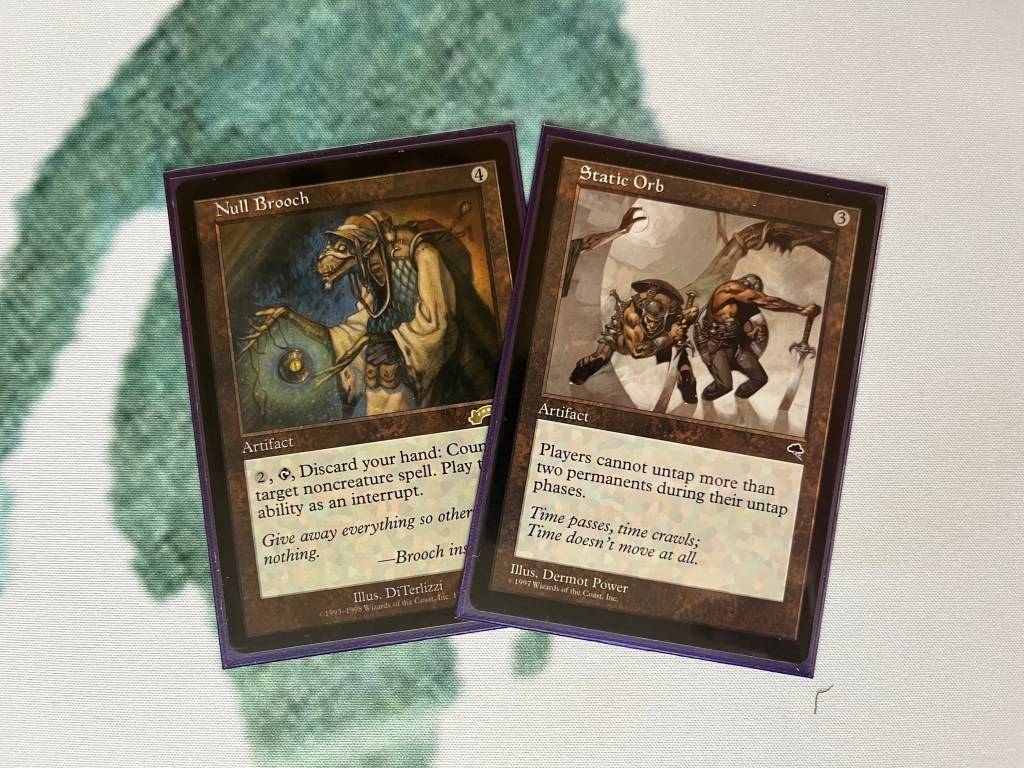
For colorless cards, I wanted some counterplay to top strategies, including buyback decks. I added Static Orb. It’s not a card that I was enamored with as a kid. Sure it’s iconic, but for what? I’ve never seen one played or people use them. However, buyback can run away with the game. And although aggro has the tools to beat this (speed), I wanted some extra interaction. And Tempest came already with this super weird and iconic rare, so of course I had to include it. As a bonus, it interacts nicely with the 3 Propaganda for an imitation of the popular PropaOrb deck. I haven’t seen this new addition played yet, but people have been excited about it, so that’s already a win. Null Brooch was also a house at the time and is a great tool for aggro decks to stop buyback.
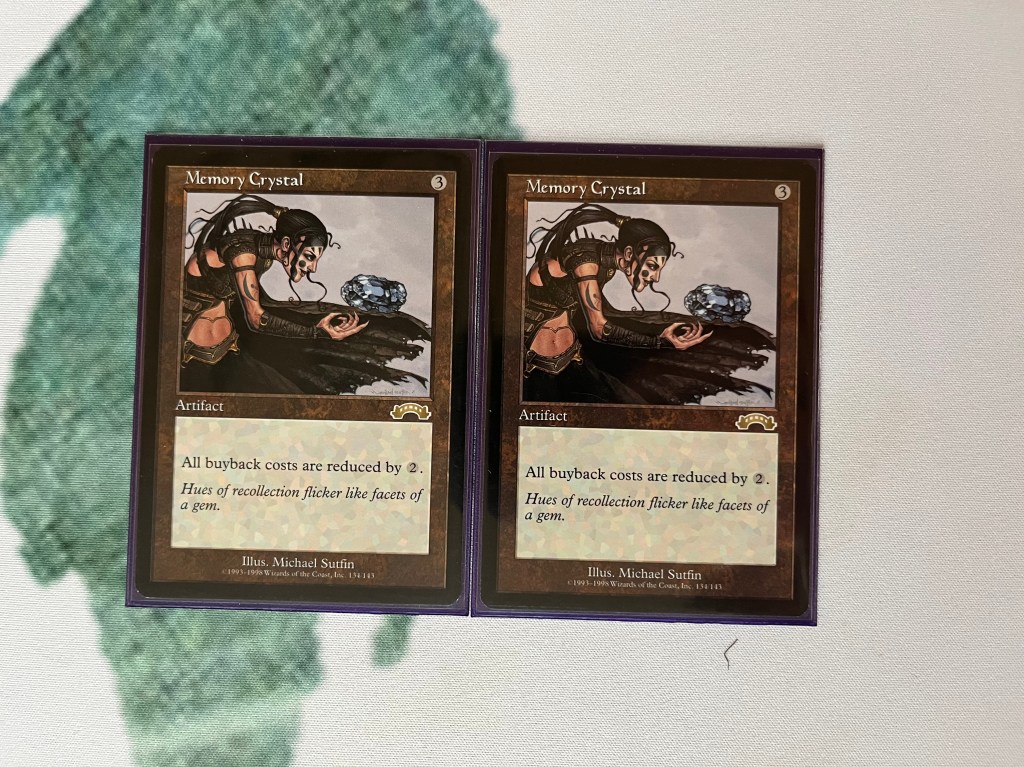
I didn’t have space for the 5 medallions, though they are very iconic. In their place, I put the two Memory Crystals. It can be a throwaway card, but even one is a good incentive to play a buyback deck. Two can get pretty disgusting. I love it.
For gold cards, I chose to include all of them, even ones that aren’t particularly strong on their own, like Dracoplasm. Having the full cycle felt very iconic and nostalgic to me, and they each have their place in decks. Part of why I wanted Dream Halls to work so bad is so that somebody actually wants Dracoplasm. It enables Dream Halls by being both a blue and red card that gives flexibility to the deck while going off – even if it isn’t good for much else.
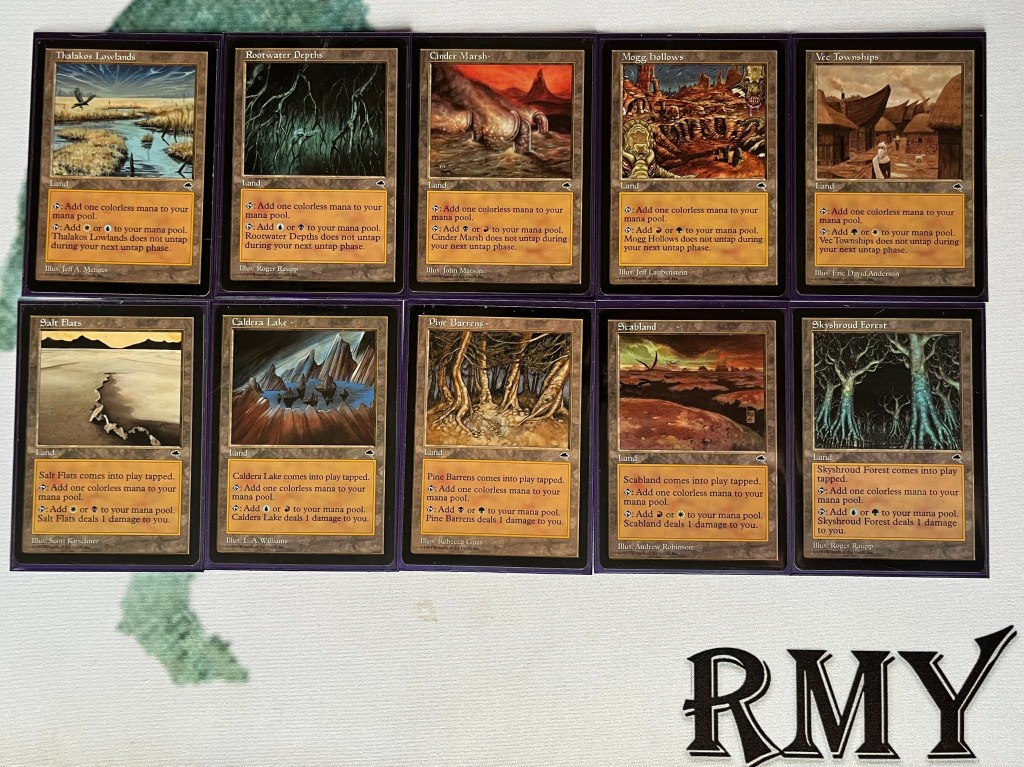
Initially, I included two of each dual land, thinking that more fixing would make the format smoother, but in practice they were underwhelming. The dual lands in this block aren’t particularly strong, and having too many of them meant that they showed up more often than people wanted to see them. If you weren’t in those colors, they were just dead picks, and even if you were, drawing multiples didn’t feel good. So I cut them back from twenty down to ten, which reduced that problem significantly.
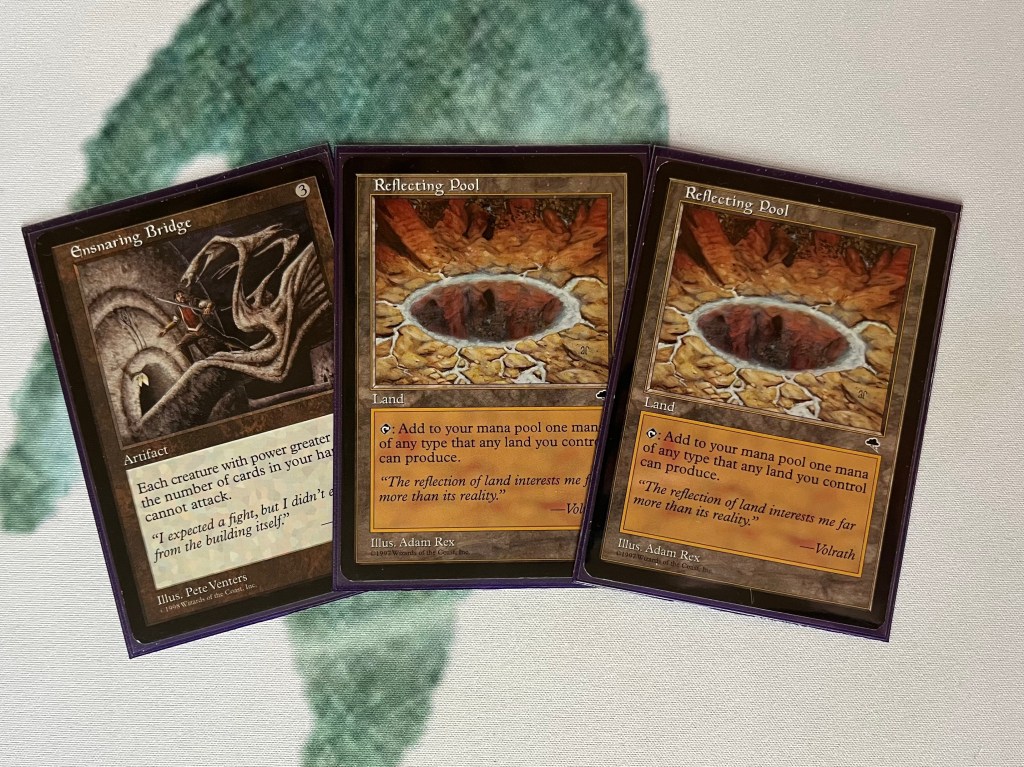
I also removed cards that didn’t contribute to the overall experience, such as Ensnaring Bridge, which tended to stall games without adding meaningful interaction, and made small adjustments to other parts of the cube, like adding a second Reflecting Pool to improve mana flexibility. This was kind of a hard cut, but I always loved Reflecting Pool as a kid, and it’s just upside as a land. In general, cubes usually want to add more lands and fewer spells up to around 20-30% lands since players won’t play more than about 23 spells out of their 45 draft picks. This block is even lighter on lands than most, so I removed a cool artifact for an also cool land. Also, having 2 meant that you could use them both with Shard Phoenix to get the requisite RRR if that situation ever came up. Reflecting Pool also makes the duals in the block better, since it either doesn’t ping you like the painlands or untaps fine unlike the slow lands.
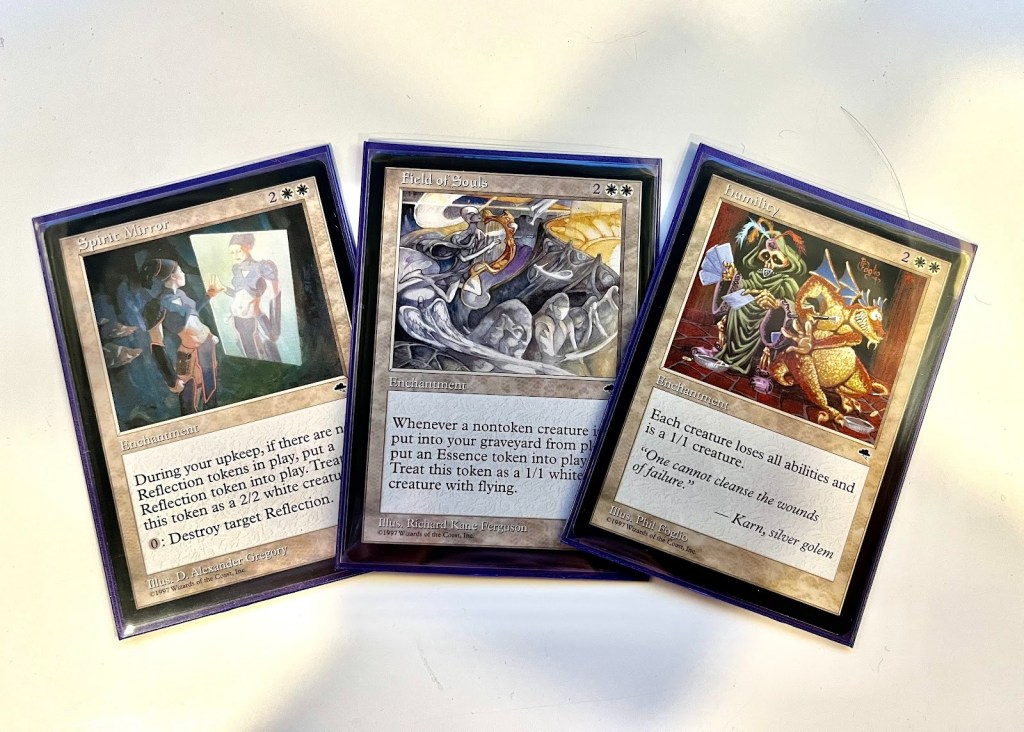
I also realized I needed something to make White more exciting and appealing. I thought balance-wise, it was actually okay. But it didn’t have the splashy effects that pulls people into a specific direction, so I added some strong enchantments from white that I always loved. Humility in particular is very iconic, but previously hadn’t really filled a role in the cube. With these, I was able to lean in more to the “tokens” theme with white and added Pegasus Stampede. It’s a classic theme for white for old school and a different angle of attack than many of the rest of the cards in the cube. I did skip Orim’s Prayer after a long debate with a friend. It’s great and a classic combo with Humility of course, but I felt it didn’t do enough on its own to warrant the spot.
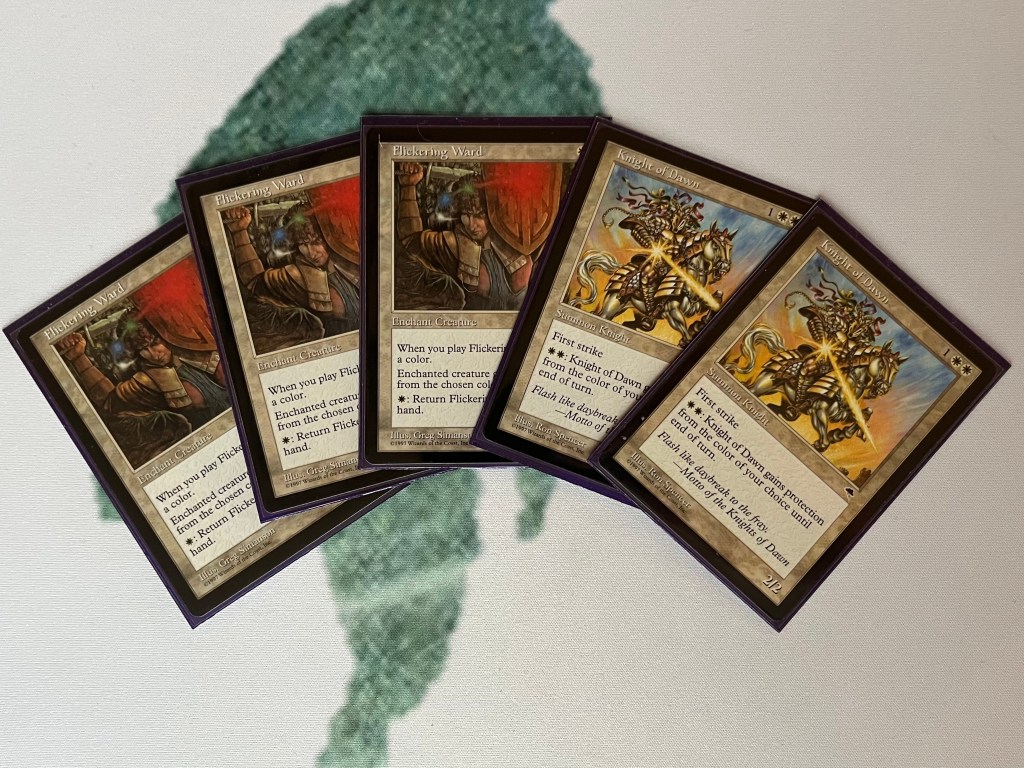
I also wanted something extra for White if I could. What I found eventually was the powerful protection mechanic. It was already one of White’s strengths in Tempest with Soltari Monk and Soltari Priest. It could become a big problem to deal with potentially, but often led to interesting plays when you could stop it. It also powered up the en-kor 6-card cycle a lot, so I added the powerful common Flickering Ward and the uncommon Knight of Dawn to help here.
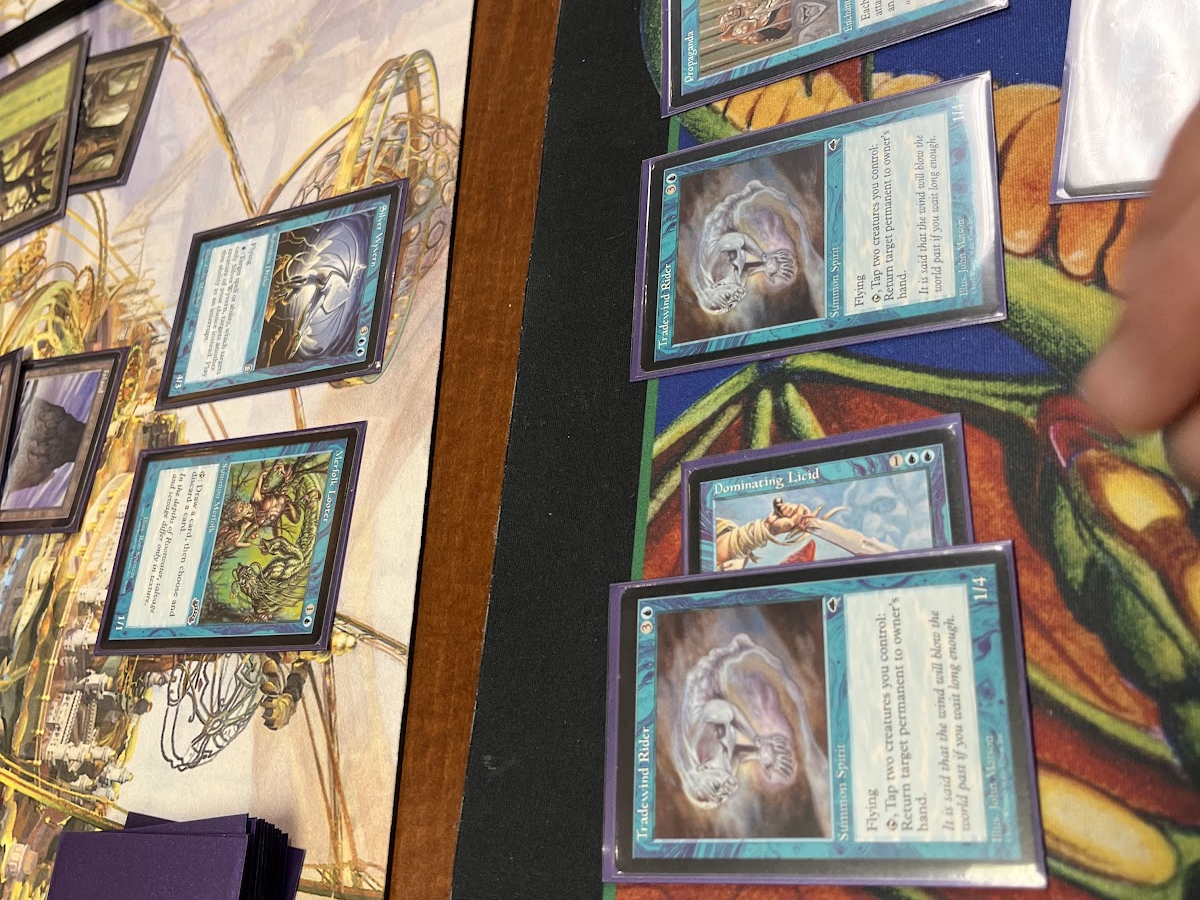
I also added some 1-ofs of weird stuff from Tempest that was also iconic. Dominating Licid is the only good licid of the bunch and stands in for the whole cycle here. One weird licid is enough nostalgia for me. Wall of Blossoms likewise was the best of the bunch and steps in for the whole wall cycle. And flowstone was a big part of the block story and several cards, so I snuck in the most useful one Flowstone Hellion.
I also added back in Evacuation. It’s a weird rare that is sometimes useful, so I had it in early on in my designs. But it got cut for other things. But when I was seeing if there was anything I could do to make Dream Halls viable, I went through the entire block card by card looking. The key was actually Evacuation. With the usual Medidates and the two Scriveners, this card lets you draw 8 additional cards which consistently lets you draw your entire deck to find your kill card: Seismic Assault. It was great seeing new life in this cool card and have it actually play an essential role in the cube.
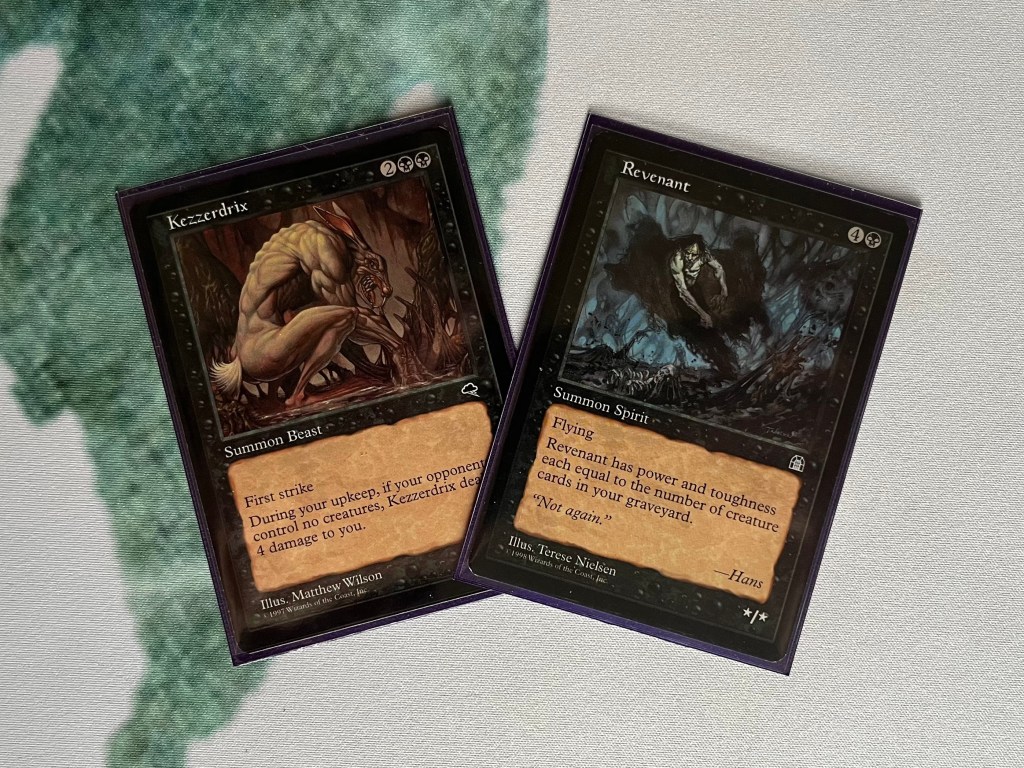
Throughout this process, the guiding idea was that every card should be good on its own, and ideally support one or more archetypes. I cut some favorite cards like Kezzerdrix because it’s a sweet card, but it doesn’t combo with anything. That uncommon spot ended up going to Revenant, which is great with reanimator, or decks that can fill the graveyard, or as a lategame flying bomb to close it out for black aggro decks after their weenies have died.
One specific change that stood out was replacing Shadowstorm with Aftershock. I wanted red to have access to artifact destruction and land destruction in a more flexible way. Scorched Earth could be decent. Stone Rain was useful but narrow, and Shatter/Shattering Pulse didn’t quite do enough on its own. Aftershock could hit creatures, artifacts, or lands, which made it much more versatile, and it was also a card that I had played a lot when I was younger but had initially overlooked.
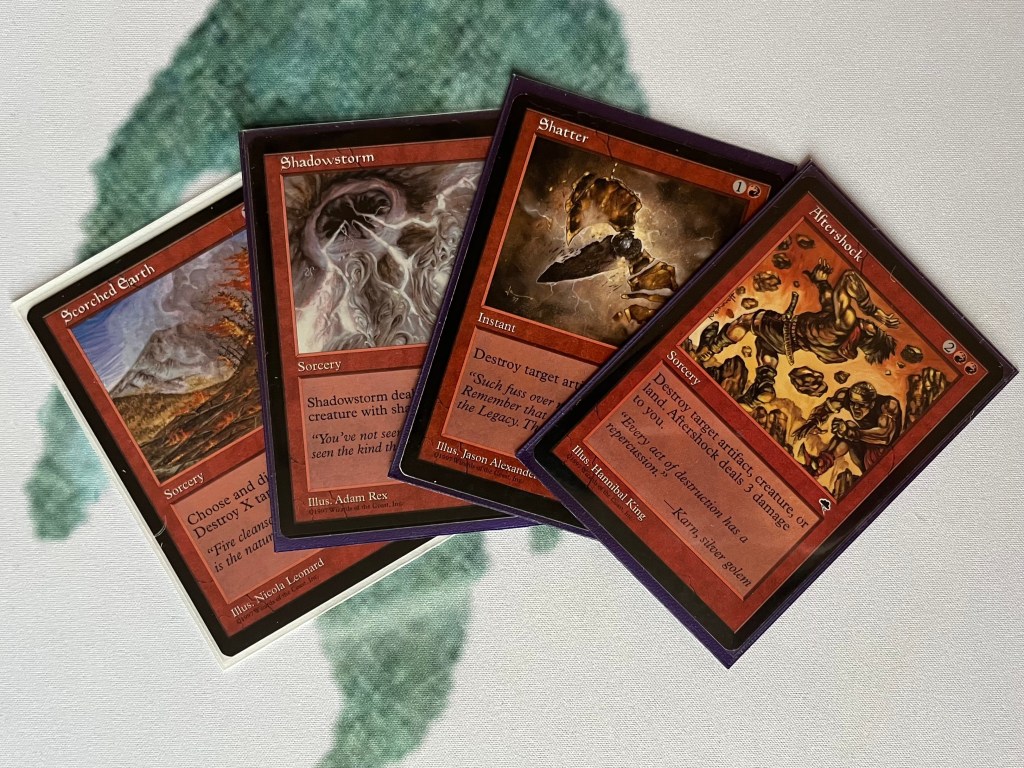
This change also helped create a more even distribution of answers across colors. Red ended up with two artifact destruction effects, green had two enchantment removal spells with Tranquility, and white had access to both artifact and enchantment removal through Disenchant. Having two of each felt like the right balance, as these cards were often drafted later but were still important to have, and placing them at uncommon made that work well.
In green specifically, I went back and forth quite a bit on the creature mix. I had a number of two- and three-drops like Trained Armodon and Heartwood Dryad, and I was trying to figure out how many of those I actually needed versus adding something more unique.
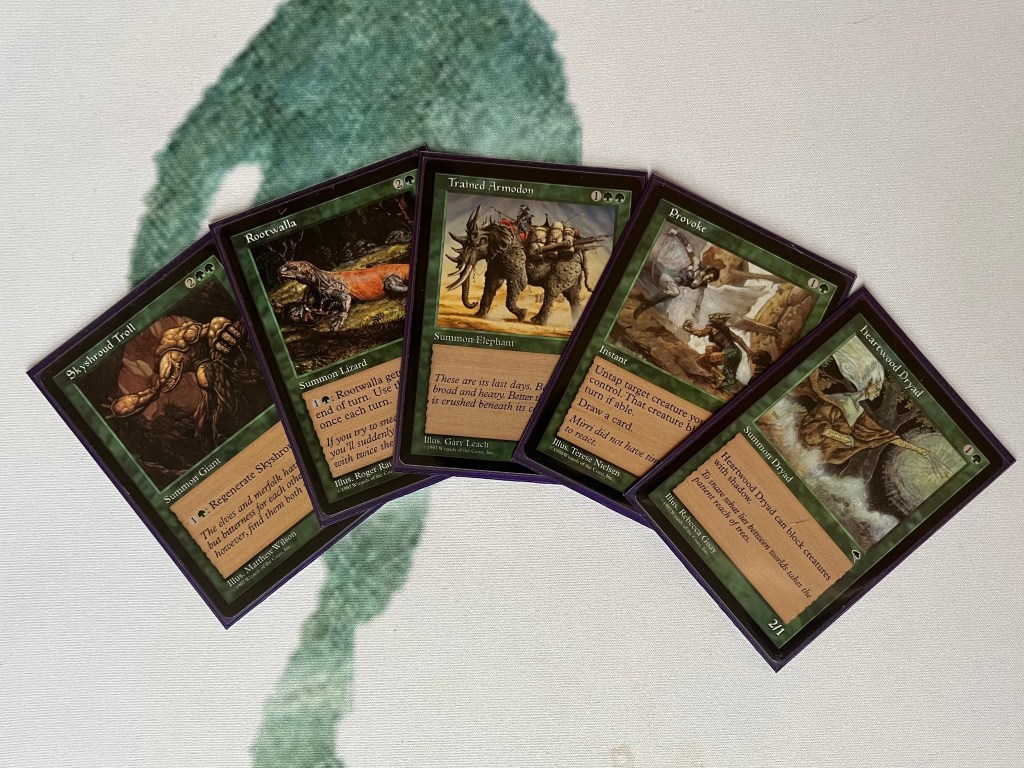
At one point I tried leaning into Provoke and more combat tricks, thinking that would add depth, but in practice it was too hard to use. The situations where you actually wanted to use it didn’t come up that often, or they required very specific board states to be effective. If the opponent had the wrong kind of creature, like if it could tap, or if it had evasion like shadow, the effect didn’t really do what you wanted, and in some cases you could even lose value if they got rid of their own creature somehow. I ended up realizing that I didn’t need as many of those niche effects, and that having a consistent base of solid creatures was just more useful.
What I learned from playing it
I’d had the cube designed as something I was happy with for a few years on CubeCobra. Then finally, I got together a few times with the Rocky Mountain Yetis and drafted others’ Ice Age cube and Mirage cube. I had a blast! It really let me feel the draw of experiencing someone’s special cube and opened the door for me to actually play with a cube I’d designed. I wanted to contribute something back to the group, so I started collecting the cards.
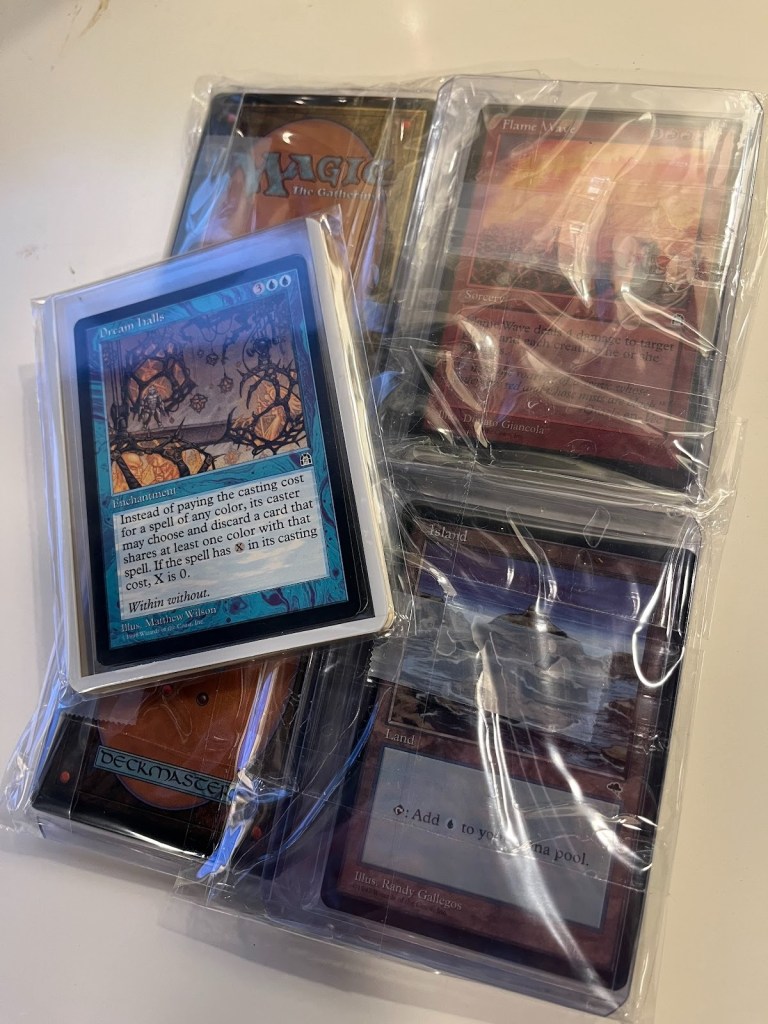
After several months of collecting, I scheduled a meetup to test it out. It was a hit! We did it a few more times, and after running a few drafts, I started to see how the format actually played out. It worked out quite well and people really enjoyed it.
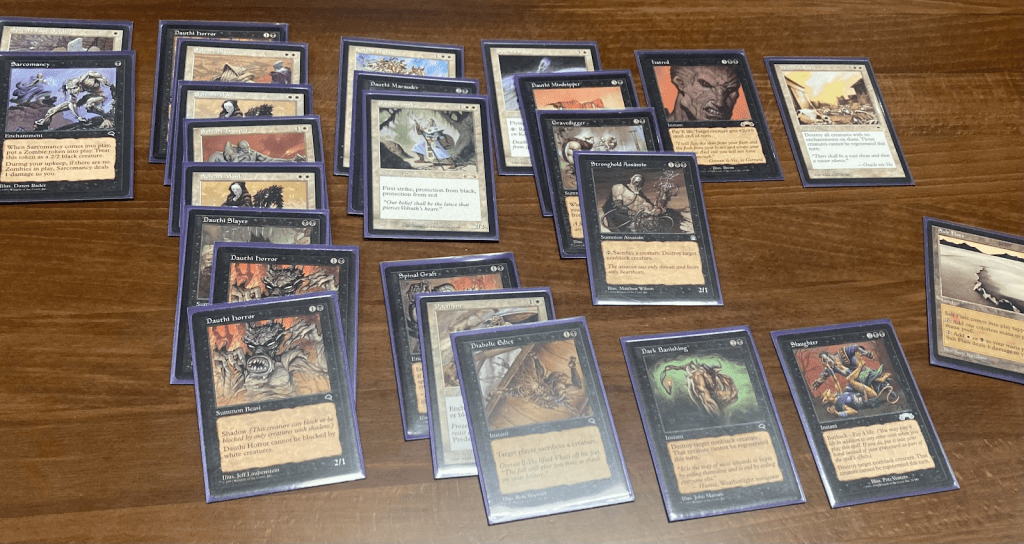
Control decks, particularly blue-black, performed well early on. They had access to counterspells, the buyback mechanic, and stabilizing tools like Bottle Gnomes, which made them consistent and capable of handling a variety of situations.
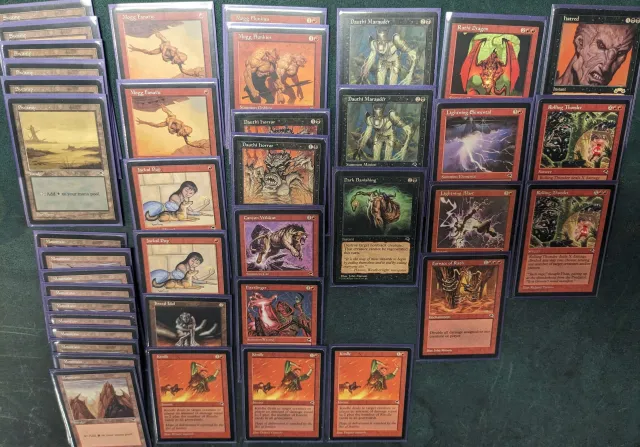
Aggressive decks built around black, especially those using Hatred and shadow creatures, were also very effective. These decks could apply early pressure and then finish the game quickly, and they won at least one of the drafts.
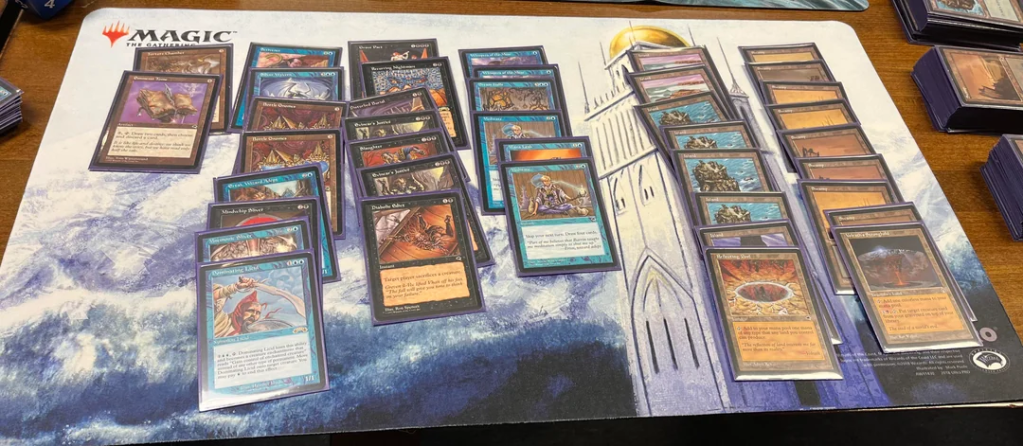
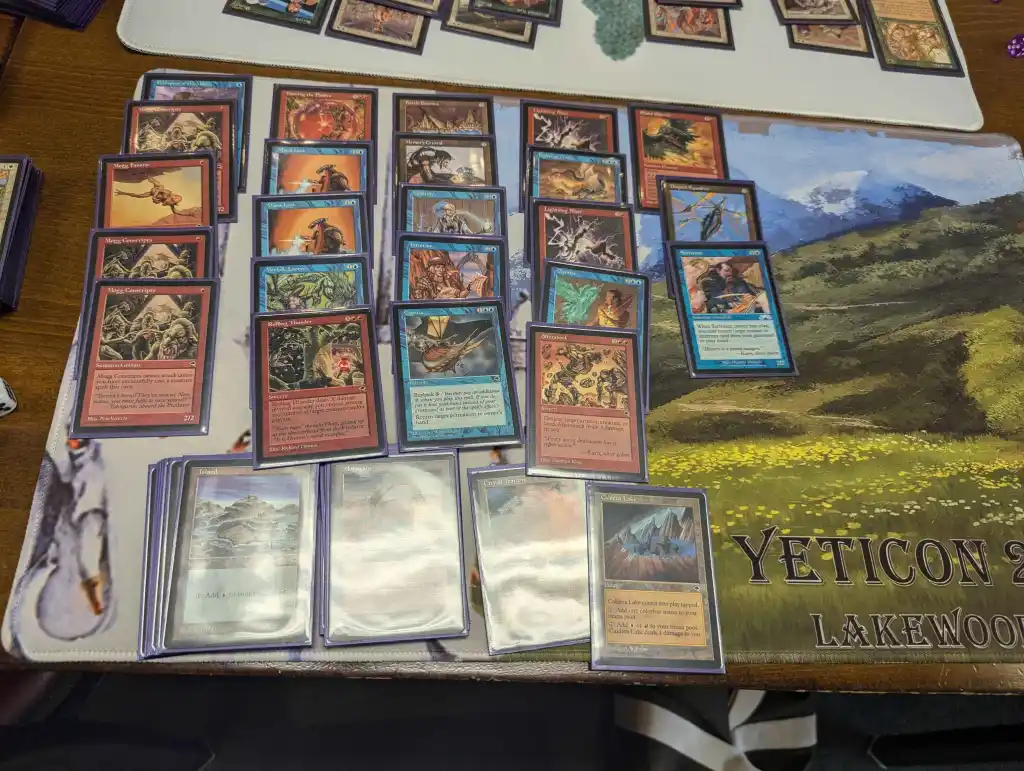
Other archetypes also showed up and performed well. Blue-red control decks using cards like Shard Phoenix were competitive, and Slivers and Dream Halls decks were both draftable and functional, even if they weren’t always the strongest options.
A few winning decks:
The journey is more important than the destination
The reason this cube is my favorite is because people get excited to play it. I love hearing stuff like “This is in here?!?”, and “Ooh, a Tempest cube!” I’ve tweaked it to be more a reflection of what others get excited about, and not just my platonic ideal of a cube. One player got excited about the splashy impactful enchantments like Bottomless Pit and Recycle, so in went Pandemonium and Humility and he loved it. Someone said Dominating Licid was strong in his cube, so in it went.
I feel great that this cube is more of a collaboration and collection of feedback, than it is a fresh idea that sprung forth solely from my head. And I think that’s why people like it. Because they keep telling me what they want and I make it exactly that. It’s kinda like designing a game or a product: getting feedback is invaluable, and I think it’s led to a really cool place with this one.
And iteration is a key piece. I really enjoy looking at the ‘blog’ section on CubeCobra and looking at all the swaps that I’ve made. It really tells the history of the cube and what people liked and didn’t like. I’m sure it’s not finished, and may evolve as we play it more or the player mix shifts, but it’s pretty good as is, and I’m always pleased to take it out for a night.
 Rocky Mountain Yetis
Leave a comment