Exploring the Realms Between Mastery and Discovery
My previous articles have talked a lot about my move from the United States to the UK and, now that I have lived here for almost three years, I’ve started thinking more about how my current draft crew came together. When I arrived, there was not a group waiting for me to play cube. There were plenty of people playing Magic, but the formats I had spent time with were not Commander, and finding people who wanted to regularly sit down and draft my unique collection of cards was not as simple as finding the local group and asking to join. I had put some effort in prior to the move. I drafted a Lonely Hearts Reddit post and got one reply, but my search still had some serious ground to cover. Lots of HR experience has taught me that if one person is saying something, at least five people are thinking it, and seeing this one person say they wanted to cube meant that there had to be others that wanted to as well!
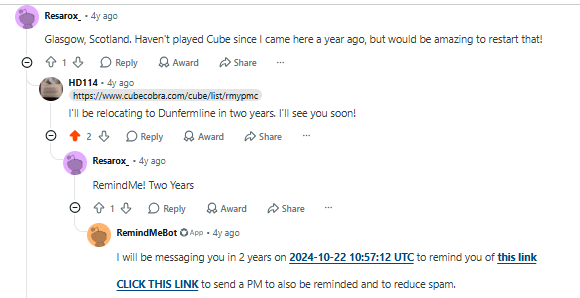
Although there was never a grand plan for what GLM was supposed to become, the premise was simple; I wanted somewhere to play cube consistently and wanted others to play with. There are advantages and drawbacks to being the only show in town, and this was my first time arriving somewhere that left me very much on an island across all the ways I interacted with the game. While I quickly gave up on my quest to get people to play Old School, I figured cube would be the easier platform to stand on and draw some positive attention. Some of the people who showed up at the start were competitive players who enjoyed cube because it offered a different puzzle from constructed with a well-known meta at any given event. Others were happy to have somewhere they could cube at all because there aren’t many opportunities to do it consistently. Regardless of the reason, I bet on the right horse and the seeds for GLM were planted in the fertile soil of Paisley.
The cubes we drafted at the beginning pretty much reflected what I had available, including the old-border lists I brought with me. We never sat down as a group and defined what kind of cubes we wanted to draft consistently and honestly, there was never really a consideration of us as a “group” until I started our Discord as a way to communicate consistently and set up weekly events. I had posted flyers in a few game shops, a couple of which I believe are still buried on their notice boards, but the start came less from these efforts and more from the first five people that showed up to draft the first night. Over time, the days of the week we played shifted, the venue we played in moved around the city, but one thing stayed the same; I hosted a cube draft, rain, shine, tidal wave, whatever, every week.
As drafts started to fire regularly and we built up the first cadre of regulars, the personality of GLM developed along the way. For a long time, my cubes were the main source of draftable material and because of this, the lists that we drafted were niche to the community at large. Over time I ended up proxying a vintage cube and a couple other more “standard” cubes to help give us options to lure in some new personalities that were not stoked to draft my 93/94 Ante cube on the regular. I had no idea what balance of environments would continue to grow the group, but the answer started coming from the people who committed to cracking packs with me every week. One week, a member brought a Mardu Dragons versus Knights Cube they had built in secret. It was a unique multiplayer setup, and we had a blast drafting it. The most important part of this story is that the strange cube was not mine. Someone else had built something unusual and knew there was a table where they could bring it to draft.
This was a defining moment for GLM. There is a great TED talk on what it takes to start a movement and its central idea is that the first follower transforms someone doing something unusual into something others have permission to join. This was my second dancer in the park. From there, more curators appeared and the cubes that people started to bring continued to be wonderfully niche. This includes things like a Mystery Booster Cube, a Planar Standard Cube, and I’ve continued to bring environments like Mono-Blue, Old Border Desert Cube and plenty of other niche piles of cards to the table. There are Cubes I’ve drafted with GLM over the past year that I would never have sat down to play a few years ago and some have produced the most fun nights I’ve had playing Magic.
Variety has become a constant for us but as I have been talking to more and more groups that cube at differing levels of consistency, I have found that this is not the one-size-fits-all approach. I set out to better understand the variables that influence how a group decides what they want to draft week over week. What I have found is that the people I’m talking to largely fall into one of two buckets: those focused on mastery and those focused on discovery.
Like with all broad bucketing exercises, there are several shades of grey and my sample size of conversations isn’t going to survive peer review. The difference has become increasingly obvious to me as I have talked to people about the relationship between how often they cube and what they choose to draft when they get that opportunity. Some groups have an established list, and that’s what they enjoy playing. They know the cards and each draft gives them an opportunity to get better at drafting in this familiar environment. There is always another archetype to explore or a deck they haven’t played before. Familiarity doesn’t make the draft less interesting because part of the fun is becoming better within a habitat that is a known known. To me, this is a pursuit of mastery. The setting remains consistent while the decisions within that setting change week to week. This type of experience is focused on depth, with each draft offering another opportunity to understand the ecosystem more deeply.
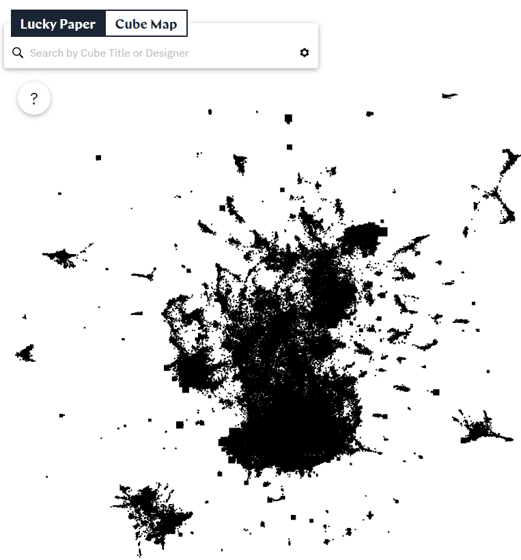
Other groups, including GLM, are more interested in seeing how far they can venture on the cube map and how many different environments they can explore. They want to understand “what else cube can do?” For these players, the variety of the setting becomes a big part of cube, and sitting down without knowing exactly how a draft is going to work is very appealing. This pursuit of the known unknown is a pursuit of discovery. and how many different corners of cube they can experience, with each one requiring a broader set of skills. Neither of these approaches is better, and neither of them necessarily produces better players or designers. One’s preference on this spectrum very much informs what type of drafts they will show up to when invited.
I have always been someone who enjoys mastery. I strive to be deeply good at the things I do and most of those activities require a significant amount of practice doing the same thing over and over again in varying conditions. That feeling still thrives within, but what initially drew me to cube as my format of choice was discovery. Discovery is why I became a cube designer and what has fuelled my obsession in building cube after cube. One of the reasons I fell out of love with constructed was that the games started to feel the same. Despite having built several constructed decks, I had seen pretty much every variant of opposition within the Old School meta. Cube solved that problem (and many others) and I have found that my excitement to design far and wide is accompanied by my desire to explore as many separate builds as I can. There is a particular brand of excitement in someone putting a cube on the table and having absolutely no idea what is about to happen. The first time we drafted the Planar Standard cube, I spent a not small amount of time trying to understand mechanics and card frames that made Magic feel like a brand new game I was trying to learn.
On the mastery side, none of those experiences gave me the comfort that comes from sitting down with a cube where I know the important cards and understand what decks are most viable. I have cubes that I have drafted over 100 times and I know those cubes back to front. With these new environments, I had zero total draft reps. They gave me a problem I had no idea how to solve, and I’ve found that figuring out what is going on has become my primary motivator for cubing.
Where a group sits on this spectrum becomes much more relevant when the opportunity to draft is limited. If a group gets together twice a year, it makes sense why they want to pull out a cube they already know they love. There is a lot of value in spending a rare evening further developing mastery with something everyone already understands, especially when that familiarity lets people get immediately into interesting decisions instead of spending the first half of the night reading every card to try and understand the environment itself. These groups are also usually closed ecosystems. They aren’t necessarily trying to add more people to an already established group. There are very few variables in this equation and the level of risk in focusing on a known known through mastery is low.
Groups like GLM have the luxury of approaching this decision differently because we play every week. If a particular cube completely melts my brain on Wednesday, we will draft a new cube the following Wednesday. If someone looks at the poll and has no interest in what won, they can stay home without wondering when their next chance to cube will happen. We also have a large body of players that drift in and out, especially since we are in a university city. That consistency has had the converse effect and allowed discovery to become relatively low risk.
This low risk doesn’t guarantee the discovery approach will always be positive. Two newer members recently joined us to draft a new desert cube, neither having played that style of draft before. At the end of the night they both told me they hated it. Not that it wasn’t quite their thing or that they would need another draft to decide. They hated the cube. They explained why, I thanked them for giving it a shot, and both immediately said they’d be back the following week. One of them joked afterward that they just needed to “git gud” and all of the problems they had would disappear. Their willingness to try something unfamiliar hadn’t resulted in discovering a new favourite way to play Magic. They discovered something they didn’t like, which is still discovery, and fortunately the cost was relatively low. More importantly, one Cube they didn’t enjoy hadn’t cost them their opportunity to play cube because another Wednesday was only six nights away.
The opposite also happened that same night with one of our regulars. We vote on what we’re going to draft each week and his choice didn’t win. He came anyway, and afterward told me that he’d arrived apprehensive because he really didn’t think he was going to enjoy what we were playing. By the end of the night he was energized and had a great time. Those two events happening on the same night have made me think a lot about what we are actually offering each week. This balance between mastery and discovery also helps explain why different people choose to spend their Wednesdays with us.
We have players who will show up almost every week regardless of what we’re drafting, and we have others who might disappear for an extended period of time before a particular cube brings them back to the table. One of the best players in our wider group explained their thought process to me recently when we were talking about why they show up to some drafts and not others. They want the puzzle. A more familiar draft, or one that doesn’t present an interesting enough puzzle, isn’t always enough to justify giving up an evening of precious free time to draft. I had always noticed the weeks when they weren’t there, especially as they were one of the OG Five that sat down with me that first night, but hearing them explain it this way made me realize that their attendance wasn’t inconsistent at all. They were extremely consistent about what they wanted from cube, and more importantly, GLM gives them the opportunity to draft environments that excite them.
Understanding that has changed the way I think about attendance. Eight people felt like the obvious measure of success because eight people make a perfect pod. I still love seeing eight names on the list, but the mastery/discovery spectrum has made the number itself less interesting to me. Someone skipping a draft because the list doesn’t offer what they want is not necessarily an indication of them disengaging from the group. They may just be waiting for a different puzzle. We have a core group willing to take a chance on almost anything and an orbiting collection of players who join us when a particular cube scratches their itch. The goal can’t be to guarantee that everyone will love everything we draft or that they will show up each week because that would require knowing the result before we run the experiment. Part of discovery is occasionally finding out that something is not for you. The value comes from having enough opportunities to keep asking the question.
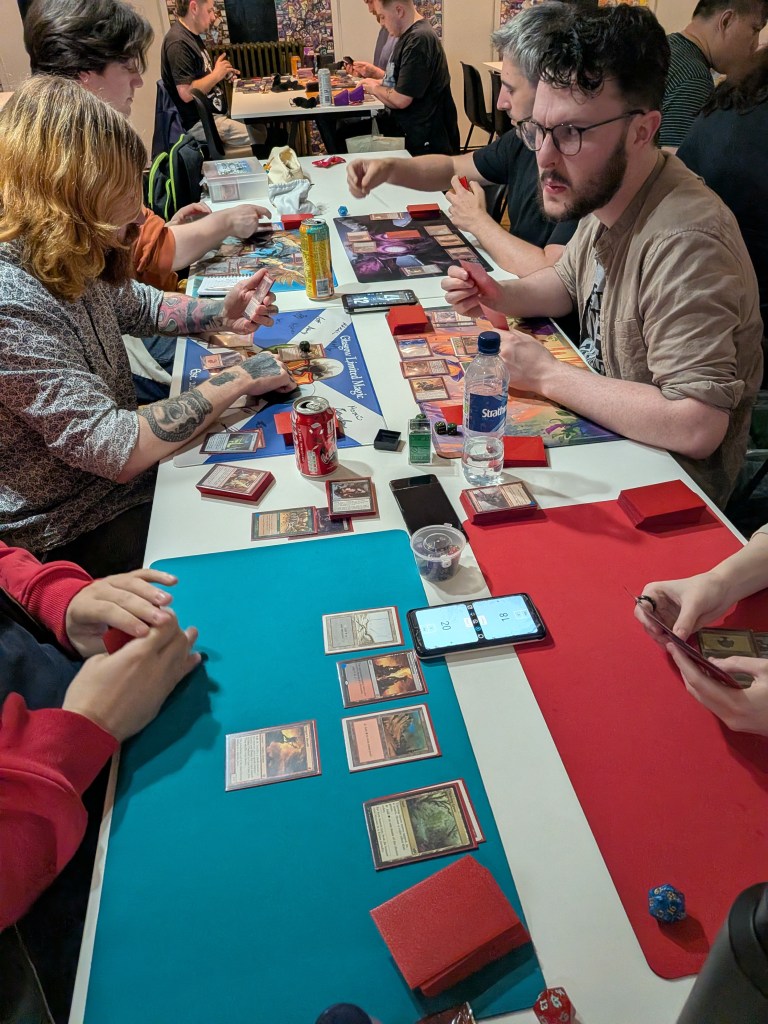
The strange part is that allowing these preferences for discovery and mastery to prosper has made the group feel more coherent. Nobody ever decided out loud that GLM was going to become the place where niche cubes get drafted, but the consistency of having somewhere to put them has encouraged people to keep bringing experimental cubes they are working on. Those cubes have attracted more players who want discovery, while the constant rotation still brings around those cubes that give players opportunities for mastery.
The key variable in balancing this equation, I have found, is repetition. The more opportunities we have to draft, the lower the stakes become around any individual choice. Discovery and mastery stop working in opposition because we can move between them from week to week. We may never understand any one of these environments as deeply as a group that has drafted the same cube fifty times, but repeatedly sitting down with something unfamiliar develops its own set of skills. The cards change and sometimes the entire structure of the draft changes, but figuring out how to approach something I don’t understand is itself something I’ve gotten better at. There is its own brand of mastery in becoming comfortable with discovery.
When I sat down for that first draft after moving to Scotland, I was desperate to find some other people who wanted to play cube as often as I did. I didn’t know if there would be a second draft, much less what the collection of people around that table would look like three years later. What has surprised me is how much of GLM’s identity has formed around discovery while still leaving plenty of room for people pursuing mastery to participate in their own way. Some people come almost every week and others might sit down with us twice a year when the right cube appears. I used to think success meant getting all of those people around the table at the same time. Now I am much more interested in having enough different experiences that they all eventually find a reason to come back. If this Wednesday isn’t it, there is always next week.
 Rocky Mountain Yetis
Leave a comment