
The best cube draft I’ve ever been afraid to play.
Last month, my mate posted a new project in our cube Discord. It was a Planar Standard Cube built from the current Universes Within Standard sets. As people started scrolling through the list, the excitement was palpable. I haven’t seen so much activity in our discord, ever, and this was a great moment as this project really piqued the interest of our core group of players. They ran mock drafts, started exploring archetypes, and debating first picks before the cube had even been sleeved up. I know this because I spent the next Saturday at my friend’s house helping him sleeve everything in anticipation of the inaugural draft. I stared at the Cube Cobra page for the better part of an hour before typing the only response that I could.

It was meant as a joke, and people laughed (at me) but in all good jokes there is a sobering level of truth and there was something very real hiding between the exclamation marks. I genuinely did not know these cards. Mechanics like Warp, Behold, Prepared, and Max Speed were completely foreign and I had no idea what I was looking at as I scrolled through the list rep after rep. My previous articles have chronicled my voyage from Old School into more modern cubes and the progress I have made has been a fun journey, albeit a slow one. I have only recently reached the point where cards with the Adventure mechanic no longer cause my brain to seizure, and now I was looking at an entire cube filled with text boxes in the wrong places that seemed determined to undermine all of the progress I have made.
My first instinct was to hide behind my usual role. As one of the organizers, I wanted to support the project enthusiastically. Someone had spent hours building a cube they were excited about and the last thing I wanted was for my own insecurities to dampen that excitement and that of the others participating. Outwardly, I encouraged the curator and tried to assure everyone (including myself) that I was looking forward to trying something new. Internally, the emotions were very different. I was terrified. Part of that fear came from the obvious place; I did not know the cards or many of the mechanics, and there were a lot of them! Beneath that was a deeper question that has been present more and more in my psyche: Am I good at the cards I know, or am I actually good at cube?
This question has become more relevant with each draft as I am able to experience an increasing number of different lists. I am forty-one years old and I learned how to play Magic in the nineties. Despite a huge hiatus from teen to adult hood, I have spent the last few years developing instincts around a version of the game that increasingly feels like a distant relative of what is being played today. Living in Scotland has only amplified that feeling as there is very little Old School Magic here (me, I am the Old School Magic here) compared to North America. It is also important to note that many of the people I draft with grew up in a completely different era of the game. They play Standard, attend RCQ’s, and draft pre-releases filled with cards that have mechanics that were not even a glimmer in Garfield’s eye when I was learning how the game worked. Despite that barrier, I have watched incredible players sit down to draft my old border cubes and perform remarkably well despite not recognizing most of the cards.
The more I watched these types of players draft, it became clear that their success had to come from something deeper than card knowledge. I had never been able to identify exactly what that was as much of my cube experiences to date have been with people who know the cards as they come from a similar background as myself. I feared that I was not developing any of those skills myself, especially since I did not know exactly what they were. That uncertainty sat underneath everything I was feeling. Was I an imposter who had become competent inside one tiny corner of the hobby? Was I simply the old guy shaking his fist at the clouds, unable to evolve?

Fear is an important emotion to me and I have a deep relationship with it. It has influenced much of my life to date and I think about fear differently because of something my track coach revealed to me when I was fifteen. I was at practice and like most teenage boys that spent their formative years watching action movies in the nineties, I carried around a lot of half-formed, misguided ideas about masculinity and fearlessness occupied a prominent place among them. Confidence meant charging forward without hesitation; you were not supposed to be scared.
My relay team was joking about something stupid and one of us said “No Fear!” pointing to their t-shirt. My coach laughed and looked me straight in the eye as he addressed the group and said, “Anyone claiming to be fearless is full of shit. Fear, is one of the most powerful forces available to us. It sharpens our attention, focuses our energy, and forces us to take things seriously. But, it is a razor’s edge. It can also be crippling, and without the ability to control it, it can destroy you.” Never had there been a scene in my life that could have been ripped straight out of a movie than that moment of teaching and the lesson completely changed my perspective. The challenge is not how to eliminate fear, it’s about how you learn to wield it correctly. Because of my coach, my relationship with fear changed. Instead of treating it like a warning, I treat it as an invitation.
This was an intimidating invitation to accept and the week before this draft, fear followed me around like the cousin who crashes on your couch “for one night” and never seems to leave. I spent a lot of minutes scrolling through Cube Cobra while other players posted screenshots of practice drafts and talked through their picks. I found myself studying their decks trying to reverse engineer the logic behind their decisions and why Giant Growth was not a P1P1 no matter how badly I wanted it to be. The curator is a good human and he knew I was struggling. He reached out to help and sent me a document explaining the major mechanics in the cube that I had never seen before. I opened it immediately….. and I never finished reading it. Every new block of word salad introduced another new concept and it was surprisingly disorienting. Reading a card had become what I thought was instinctive; I found myself mentally struggling to parse and digest what I was looking at. I would hold cards closer to my face and then farther away, I would read from top to bottom and then start again because I knew I had missed something important.
Wednesday rolled around as it does every week and we gathered at our LGS to crack packs. Not only was I riding the fear wave with weak knees but I was excited to see my friends and at least, have a good laugh around my lack of ability to analyse and interpret what was being passed to me. When the first pack was opened, I started picking removal. Anyone who has played cube with me will not be surprised by this strategy and my friends chide me about it constantly. We will finish drafting and they will ask, “So, did anyone else get any removal?”
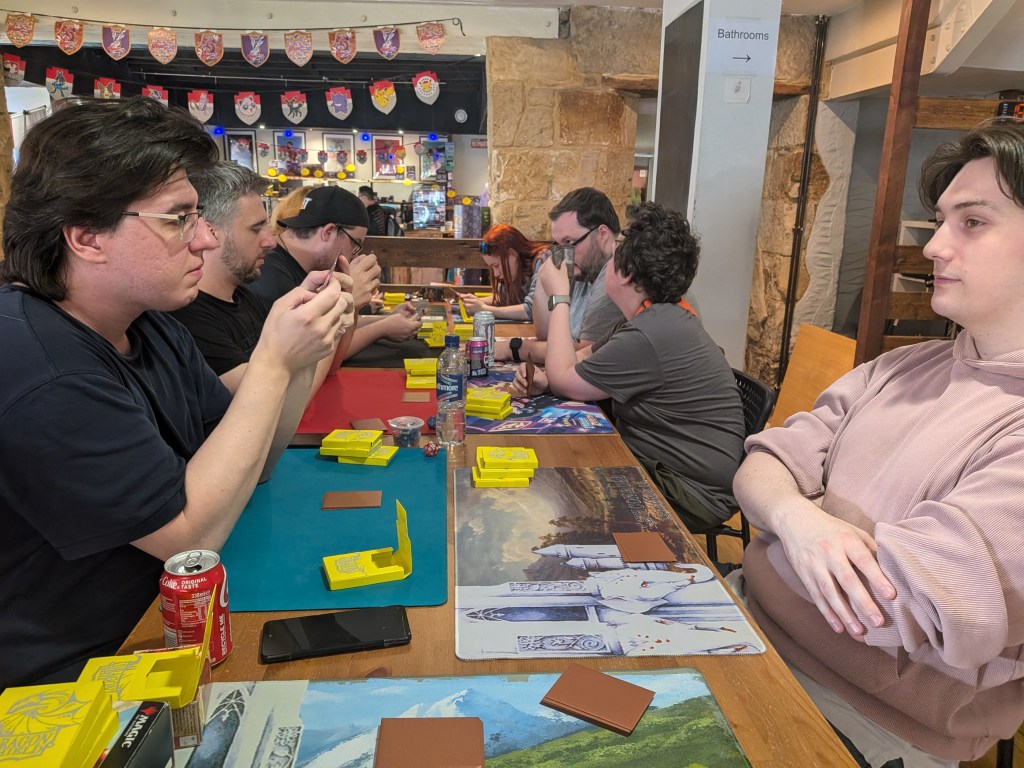
Despite the annoyance of this strategy to my opponent, there is a larger method to my madness. I do not draft removal because I think it is a strategy in itself, it’s because removal buys me time. Especially when I am in an unfamiliar environment, time becomes incredibly valuable. It allows me the opportunity to think, observe what my opponent is doing, and figure out what to do before they remove me. As with many of my maxim’s this approach does not always work. A previous “retail” draft of Theros at a friend’s birthday party taught me that lesson very quickly. I totally misunderstood how Escape worked and spent an evening discovering that my assumptions about hoarding spot removal were completely irrelevant without the ability to back it up with better threats. The removal spells I relied on did not solve the problem because every time I killed something, it escaped and left me one resource down.
This time, my plan worked better and good things started to happen. Cards started appearing that I recognized as “good”. Ouroboroid caught my attention immediately. I read it, twice, and understood it was powerful. I smiled at this moment because a lightbulb had clicked on. Maybe I did know what a good card looks like and more importantly, why it would work in my deck. Pack by pack, my deck began to take shape. The removal suite gave me confidence to help control the tempo of the game and an actual strategy slowly emerged. As I continued to open packs, I passed cards that I could see were powerful and I could understand why but I let them go because they weren’t for my deck. This draft felt different and for the first time that evening, I thought, maybe I could do this.
The first round helped nurture these feelings and my deck functioned almost exactly as I had planned. My opponent put threats on the battlefield and I removed them to keep their prepared selves from doing any serious damage. My own creatures not only survived long enough to generate value but the +1/+1 counter synergies that I had crafted took root! I had big bodies on the field, and nothing to stop them swinging in for lethal. The plan was coming together and it gave me permission to believe that I wasn’t going to spend the evening getting my face smashed in.
Between rounds, I began to wonder whether the deck had come together through more than luck. I had found the removal I wanted, but I had also recognised the counter synergies running through the list and built around them. I was still reading cards several times and asking questions constantly, but the deck in front of me (largely) made sense. This does not mean that the evening was a full on triumphant festival of self-discovery. In the second round, I sat across from a thirteen-year-old player piloting a RW aggro deck that was playing at a level still further above. I had won game one and was feeling confident and game two I was mana blind drawing all black cards and no green sources which means I got run over.
Game three was what it all came down to. I was competing for the top spot against the top deck of the draft. I drew my opening seven and saw that I had (what I thought) was the winning formula. “I’ll keep seven” I said, and slammed down a swamp. The onslaught of white weenies hit the board and, although I was taking damage, the pilot was falling into my trap (diabolical laughing and drumming my steepled fingers together). I paid X, paid some life, and landed a sweeper clearing the board. I felt the familiar sense of relief that comes from surviving an early aggro invasion and I felt good about my chances as I had bought myself some time; or so I thought….
My opponent untapped, looked at his graveyard, and played a card. I picked it up, read it, read it again, and felt my stomach tighten. He returned his three best creatures from his graveyard, complete with +1/+1 counters, and killed me two turns later. I remember sitting there thinking, this could never happen in premodern/old school! The thought made me laugh, after crying the tears of defeat, because it perfectly captured the tension at the heart of the evening.
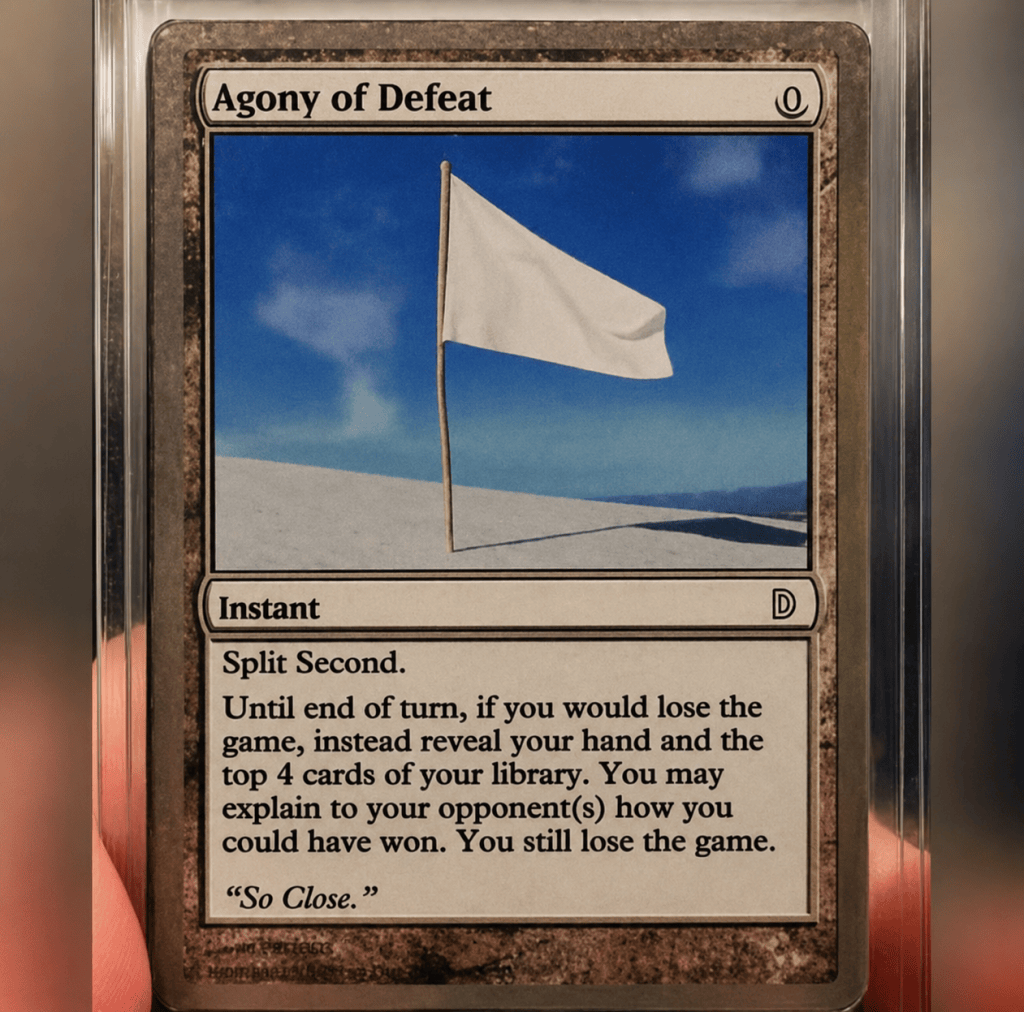
I had spent the night discovering that my skills had begun to transfer farther than I expected, and the loss brutally reminded me that the journey still has many steps. The fear I carried into the draft had not been irrational. There are lessons that had not carried over from era to era, for example, board wipes do not necessarily create the same type of breathing room that they did in 1998. Although I am picking up new skills and getting better at drafting, my MTG brain still lives in the old frame.
As I processed all of this information long after my opponent had gone to get a snack and get ready for the next round to secure his 3-0 record, I found this feeling comforting. My fear had been rooted in the idea that this draft would expose me as someone stuck in the past. Somewhere in the midst of those weekly drafts, I had stopped asking only whether a card was powerful and started asking whether it was a piece that fit the puzzle my deck was trying to solve. I hadn’t noticed that change consciously until I found myself doing it with cards I’d never seen before. At the same time, the gaps in my knowledge remain visible and my reputation as the “old border guy” was taking on new meaning. I wasn’t stuck only being able to play well with those cards and that balance between confidence and humility is where growth continues to happen for me week after week.
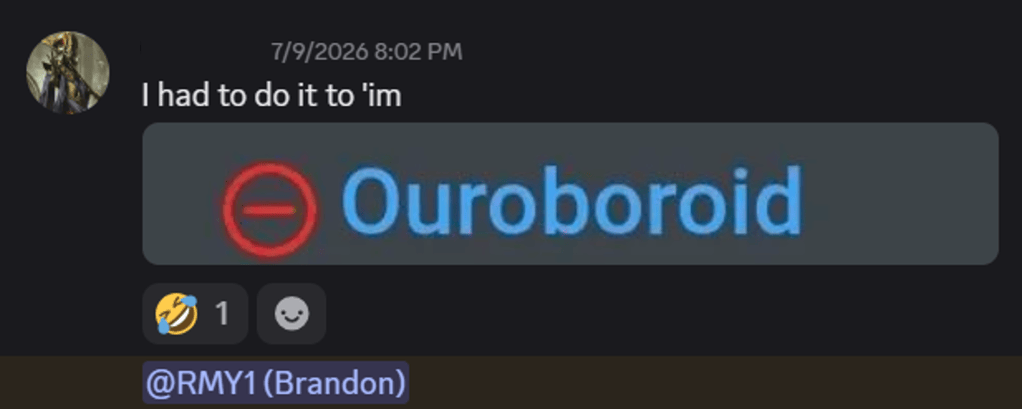
Ouroboroid became a running joke after the draft as everyone recounted the crazy boards it created and the number of games it dominated. Eventually, the card was cut from the cube for being too powerful. I loved that outcome because it was one more piece of evidence that something had changed for me. I had recognized a card that sat outside the intended power band and built around it successfully. That realization carried far more weight than the 2-1 record.
After the draft, I admitted to the curator how nervous I had been about the whole thing. He laughed and confessed that he had also been worried that I would hate the cube for the reasons I had been afraid of it. At the end of the conversation I said something that I never thought I would hear myself say, “I’d draft this again in a heartbeat.” My track coach had been right all those years ago. Fear is powerful; it demands attention and forces us to prepare. It exposes our vulnerability, but it points toward opportunities we might otherwise ignore because we are not comfortable being uncomfortable.
At fifteen, fear meant being poised in blocks waiting for the starter’s pistol. At forty-one, it means sitting down in front of a pile of cards that barely resemble the game I grew up playing. The feeling itself has not changed very much. What has changed is my response to it. A week earlier I’d spent an hour staring at Discord messages scared to death that the draft would confirm the worst version of the player I thought I might be and that my understanding of cube belonged in a tiny corner of Magic history. By the end of the night I was hoping we would draft the cube again because despite the fact that the cards will continue to get more complicated, I’ve stopped being afraid that I won’t be able to figure them out.
 Rocky Mountain Yetis
Leave a comment