Choosing experiences instead of cubes.
For the last fifteen years, my professional life has taken me around the world, walking into rooms with between five and twelve people and helping them solve problems for five to eight hours at a time. Sometimes these rooms contain C-Level executives who want the thirty-thousand-foot view of their business and what large changes they should think about to optimize certain facets. Other times, the room is filled with the people managing those doing the actual work or the end users themselves. They care about the systems that these changes will affect and how they will feel as things change. Most of the time, it is some combination of both. There are executives, managers, and end users all sitting around the same table, each bringing a different perspective and a different definition of what success looks like as well as a different appetite for the exploration of the change itself.
At the start of my consulting career, I believed success was largely about delivering the perfect presentation. I spent hours refining slides, adjusting copy, and making sure every detail was polished. My ethos was, if I could create the perfect deck, anticipate every question, and know the content inside and out, then everything would run smoothly. This feels like a very natural assumption for someone on the early side of their career; the presentation was the thing I could control, so it became the thing I focused on the most.
One of the most impactful lessons came when I was presenting to Olympic rowing coaches in China. I had spent weeks attending training sessions, watching what they were doing on the water and in the gym and the time had come for me to present my findings and make recommendations on updating the program in preparation for National Games. From the minute I started talking, the presentation started going off the rails. I had spent days preparing for it, the slides were perfect, and I knew the material inside and out that would help these coaches win gold medals at the end of the year. Very quickly, I could tell something was wrong. The coaches in the room were disengaged and although everyone was hearing me, nobody wanted to listen to what I had spent incredible amounts of time putting together.
I powered through and left the room with my tail between my legs. I had no idea what had gone wrong and I needed to figure it out quickly so I could recover and try again. I sought out one of the younger coaches that I had been developing a relationship with over the observation period and asked what had gone wrong. He was nervous in replying but finally let me in on an important secret,
“You are very young, and you look young. Your ideas may be wise but you look like you don’t have enough experience.”
I was gobsmacked… but he wasn’t wrong. Looking in the mirror, my clean shaven face made me look about 12 years old which I had not given much thought to up until that evening. So, I made a change to my presentation style. I grew a full beard, really quickly. I presented the same information to a slightly different group three weeks later and lo and behold, I had buy in and we ended up winning 22 gold medals at National Games that year!
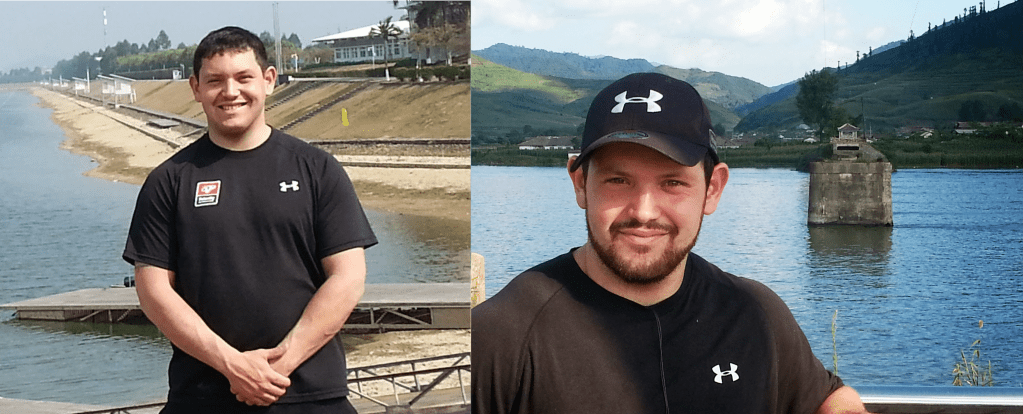
That experience has stayed with me, mostly in the fact that I have only been clean shaven once since then. More importantly, I found myself spending less time refining presentations and more time learning how to read a room and show up with the right presence. In these situations, the audience is looking for something completely different than what I expected. The skill became less about presenting information and more about understanding the people receiving it. I have seen this same lesson appearing over and over again throughout my cube journey.
When I first started building cubes, my attention was focused almost entirely on the cards themselves. Every inclusion felt important because it was a reflection of the environment I was trying to create which I believed was synonymous with the experience. I obsessed over the technical aspects that define a “successful” cube environment. All curators go through this stage because it is the most immediate problem sitting in front of them, does the cube actually work? I have spent a lot of time with that question…. I have built over 25 cubes and through hundreds of drafts, I have gathered feedback, made changes, and slowly watched them evolve. Cards that looked perfect on paper failed miserably in practice and others survived dozens of updates becoming cornerstones of the environments they live in. Through repetition, iteration, and a lot of help from the people willing to draft my cubes, many of the fundamental problems naturally worked themselves out producing environments capable of delivering a balanced experience.
I want to be careful here because I am not claiming to have solved cube design. What I am saying is that I have designed several cubes that have been drafted A LOT. Through these experiences, many of the larger design problems have largely been solved and the environments function well. They still evolve and they always will but eventually I found myself thinking less about whether a cube “worked” and more about who the particular experience of drafting it would appeal to. That shift has been one of the biggest changes in my own approach to hosting draft nights. It was a gradual realization that many of the cubes I host regularly had become seasoned lists and I trusted them to do what they were designed to do regardless of who showed up to draft them.
My preferred method of selecting a cube for draft night has not fundamentally changed. Whenever possible, I like to trust the democratic process and put options in front of people and let them vote. It usually produces a result that everyone is excited about and allows several people to put their cubes on the ballot. Most weeks that process works beautifully. If I can gather input ahead of time, that remains my preferred approach because it gives everyone a voice in shaping the evening.
Life, however, rarely cooperates with perfect planning.
I face the same issues that most curators do; people sign up late, attendance fluctuates, work gets busy, etc. Sometimes I do not truly know who is coming until a few hours before the draft begins and other times I know exactly who is coming but have very little time to prepare if I’m the one bringing the cube. These situations have become more common as life has gotten busier, and they have forced me to develop a different skill set. In those moments, I find myself looking less at the cubes themselves and more at the people who will be sitting down at the table. The question is no longer simply, “What cube should we draft tonight?” it is “What experience is most likely to succeed (best) with this group of people?” I slowly recognized that my role had changed because it required me to think differently about what it actually was. I thought my responsibility ended when I built a good cube and showed up successfully with it ready to play. If the environment was balanced and the list was interesting then I had done my job! Over time, I began to realize that building the cube was only the first part of the process. Understanding the players who were coming to draft it was another skill altogether. I was not just curating cubes anymore. I was curating experiences.
One of the ideas I wrote about previously was the concept of the quiver. In surfing, a quiver is a collection of boards designed for different conditions. In cube, my quiver has become a collection of options designed for different attendance levels and different situations. I have viewed the quiver as a logistical tool; if only two people showed up, I needed something that worked for two people. If eight people showed up, I needed something different. The goal was making sure cube night happened regardless of attendance. I now find myself looking at the signup list very differently. Instead of counting names, I find myself thinking more about personalities and it generates an important set of questions, Who has been drafting a lot recently?, Who is still learning?, Who enjoys unusual formats?, Who enjoys to be challenged to do something new?, Who enjoys high power vs low power environments? or, Who just had a long week and wants to cast some spells and relax?
None of these questions have anything directly to do with the cards themselves, yet they increasingly influence what comes out of the quiver. That change has surprised me because I never consciously decided to approach cube this way. It emerged after hosting a lot of drafts and at times failing to provide the right list for the right group. The cube stopped being the destination and became the vehicle. This is where the idea of different layers of fun started to overlap with curation in a critical way. In one of my earlier articles, I reflected on how players experience fun differently depending on where they are in their journey. Some players enjoy the challenge of improving, others enjoy discovery and there are those that enjoy competition and being the best. As a host, understanding those differences has become increasingly important.
A recent draft of my Cube of Misfortune highlighted this realization perfectly. The CoM is exactly the kind of cube that can either create a memorable evening or fall completely flat depending on who is sitting at the table. For those unfamiliar with the cube, the draft begins normally. Players draft and build decks but once deck construction is complete, instead of playing the deck you drafted, you pass it to another player and spend the evening piloting someone else’s pile. The most important factor here is the knowledge that not everyone will enjoy doing this, no matter how much I wish they would. The cube creates a completely different dynamic than a traditional draft because you spend time and effort crafting the best deck you can and not knowing what the standard of the deck that is going to be given to you. This can be extremely frustrating for certain types of players.
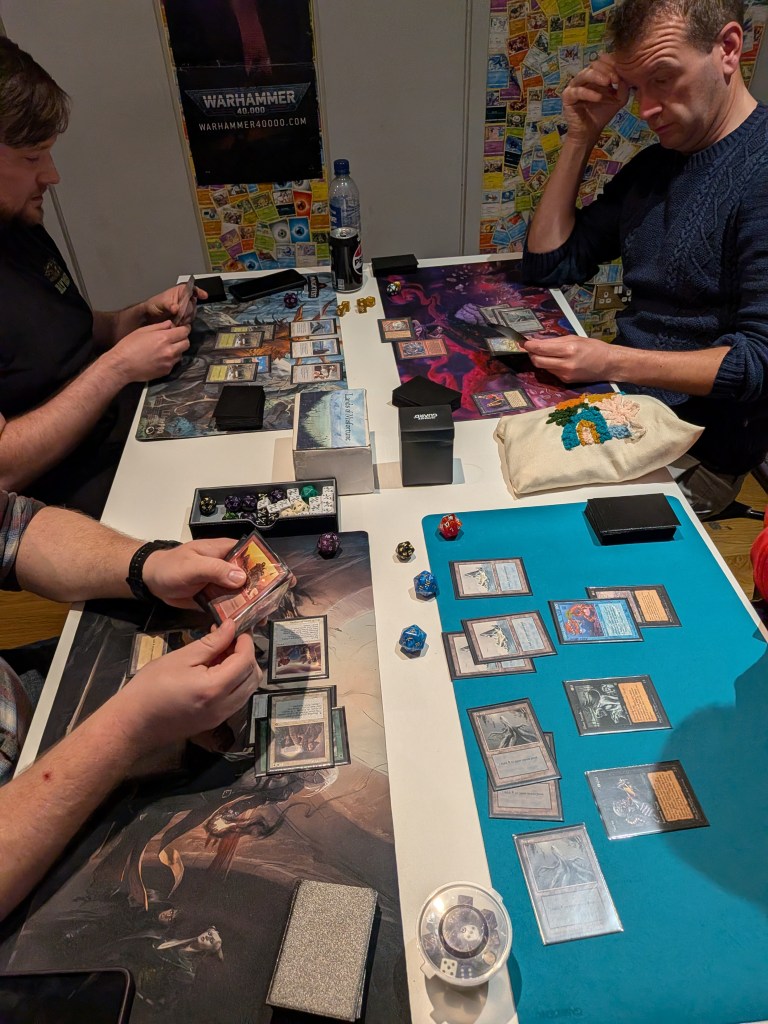
What made this particular draft interesting was that the deliberate decision to bring this specific cube happened before I left for the shop. I looked at the list of people who had signed up and immediately started thinking about what kind of experience they would appreciate. These were not players looking for a traditional high powered draft environment; they were people who consistently enjoy experimentation and pushing the boundaries of cube design. They enjoy trying unusual formats and discovering different ways to engage with the game. The Cube of Misfortune felt like exactly the right arrow to pull from the quiver for that particular group.
As the evening unfolded, the conversations became just as important as the games themselves. Players spent almost as much time discussing the decks they had built as they did the decks they were piloting. Someone would win a match and immediately turn to the person who drafted the deck to talk about a particular card choice or interaction. Players celebrated decks that performed well even when they were not the ones receiving the victory. The experience created a shared ownership that does not exist in a traditional draft. Success felt collaborative in a way that was satisfying.
The Never Cube has provided a very different lesson in the same vein. Of all the projects I have worked on, the Never Cube may be the most niche. It combines unpublished sets, abandoned design concepts, fan-created expansions, and alternate visions of what Magic might have looked like if history had unfolded differently. The audience for something like that is relatively small, even within the already niche world of cube. There are plenty of people who enjoy Old School Magic, there are fewer people who care about unreleased Magic sets and there are even fewer interested in custom card design, and the overlap between those groups becomes smaller still. Early in my design journey I probably would have finished the project and simply announced that we were drafting it the following week. I would have assumed that my excitement for the cube would naturally transfer to everyone else. Experience has taught me that people need a reason to care about it beyond my own excitement and just because I found the project fascinating did not mean everyone else would feel the same way.
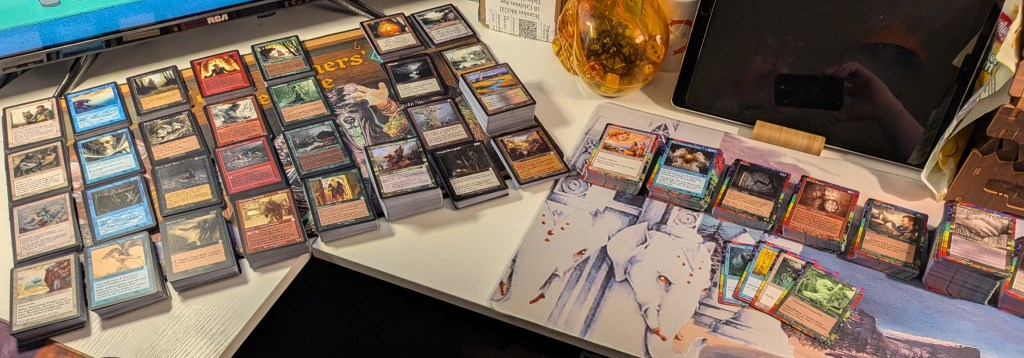
Instead of forcing the issue, I approached the inaugural draft very differently. I started talking about the project long before it was ready to draft and explaining why I found the concept compelling. I realized that success did not depend on convincing everyone to draft the Never Cube, it depended on finding the small group of players who were predisposed to enjoying something this niche and inviting them into the experience.
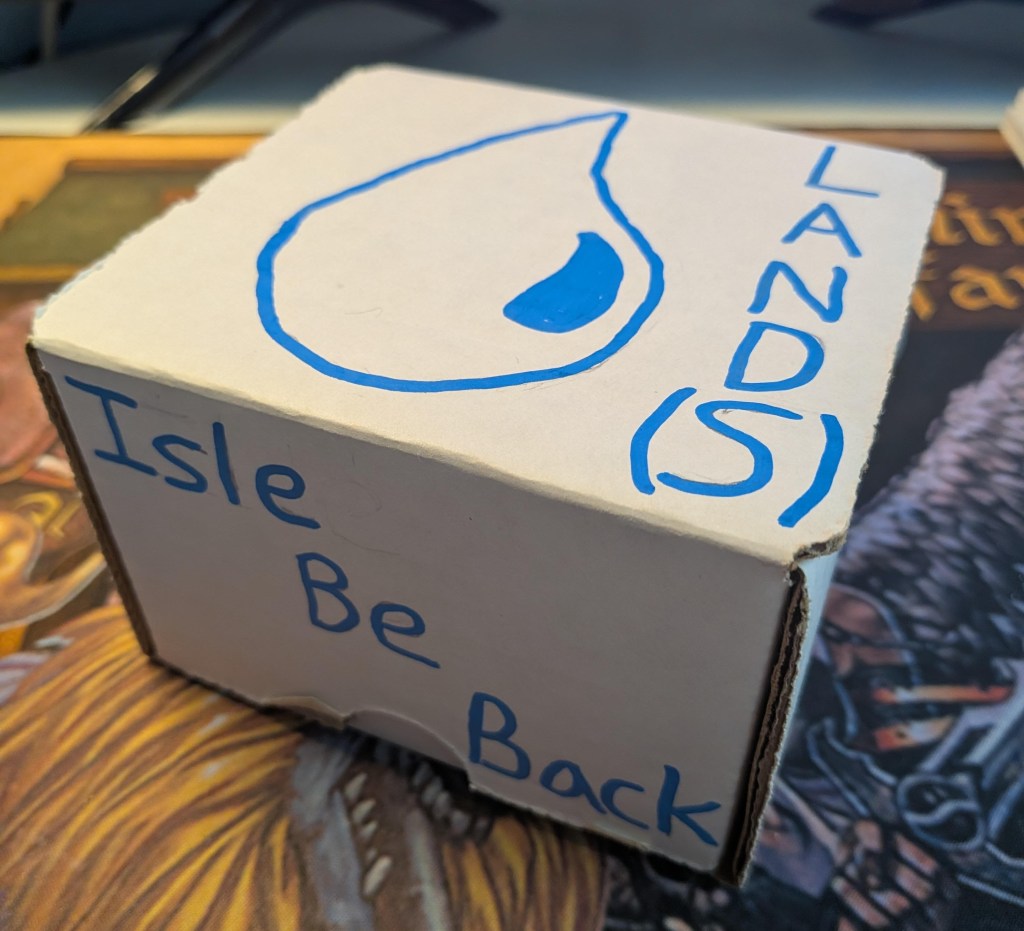
I have not always experienced success in this quest. One example that sticks with me was when I brought my mono-blue cube to a group that included several newer drafters. We started with a Minesweeper draft to allow some discourse for the newer players with open information and players were having a fantastic time. At the end of the draft portion one of the newer players told me how much fun he was having and how much he enjoyed that style of drafting. Then we sat down to play the games. The cube itself was intentionally restrictive. It rewarded patience, experience, and a deep understanding of a very specific style of gameplay. At the end of the evening, I asked everyone if they had fun. His response was immediate,
“The draft was really fun, but I didn’t really enjoy the games. I like games where I can play Magic.”
I had made a mistake. The experience was not aligned with where he was in his own journey. I had selected a cube that I thought was interesting without spending enough time considering whether it was the right fit for everyone sitting at the table.
That presentation in China taught me a life lesson that has stuck with me. Growing a beard helped me figure out how important it is to understand the people sitting in front of me so I could meet them where they are and put them in the best position to receive the information I had to share. Cube has quietly reinforced the same lesson. I still care deeply about the cards and the environments that I build, but along the way the cube itself stopped being the destination and became the vehicle. I have found myself caring less about which list of cards I bring on a Wednesday night and more about choosing the environment that gives the people around the table the best opportunity to create a memorable evening together.


Leave a comment